masters.hkubs.hku.hk · 明确当季[Skip to content](https://masters.hkubs.hku.hk/our-programmes/master-of-finance-in-financial-technology/#content)
Submit search form
- [Events](https://masters.hkubs.hku.hk/event/)
- [Contact Us](mailto:fbemsc@hku.hk)
- [Apply Now](https://portal.hku.hk/tpg-admissions/programme-listing?faculty=hku-business-school)
Close mobile navigation menu
[](https://masters.hkubs.hku.hk/)
[](https://masters.hkubs.hku.hk/)
- [About Us](https://masters.hkubs.hku.hk/our-programmes/master-of-finance-in-financial-technology/#)
- [Why HKU Business School](https://masters.hkubs.hku.hk/why-hku-business-school/)
- [Rankings & Accreditations](https://masters.hkubs.hku.hk/rankings-accreditations/)
- [Our Facilities](https://masters.hkubs.hku.hk/our-facilities/)
- [Our Masters Programmes](https://masters.hkubs.hku.hk/our-masters-programmes/)
- [Employer Services](https://masters.hkubs.hku.hk/employer-services/)
- [Our Programmes](https://masters.hkubs.hku.hk/our-programmes/)
- [Admissions](https://masters.hkubs.hku.hk/admissions/)
- [Application Procedure](https://masters.hkubs.hku.hk/admissions/#application-procedure)
- [Admission Requirements](https://masters.hkubs.hku.hk/admissions/#admission-requirements)
- [Composition Fee](https://masters.hkubs.hku.hk/admissions/#composition-fee)
- [Scholarship & Financial Aids](https://masters.hkubs.hku.hk/admissions/#scholarship-&-financial-aids)
- [Student Services](https://masters.hkubs.hku.hk/our-programmes/master-of-finance-in-financial-technology/#)
- [Career Support](https://masters.hkubs.hku.hk/career-support/)
- [Student Experience](https://masters.hkubs.hku.hk/student-experience/)
- [Alumni Network](https://masters.hkubs.hku.hk/alumni-network/)
- [Students Stories](https://masters.hkubs.hku.hk/alumni-students-stories/)
- [FAQs](https://masters.hkubs.hku.hk/faqs/)
Close sidebar menu

# Master of Finance in Financial Technology
1. [Home](https://masters.hkubs.hku.hk/)
2. [Our Programmes](https://masters.hkubs.hku.hk/our-programmes/)
3. Master of Finance in Financial Technology
4. Overview
- [Overview](https://masters.hkubs.hku.hk/our-programmes/master-of-finance-in-financial-technology/#overview)
- [Our Faculty](https://masters.hkubs.hku.hk/our-programmes/master-of-finance-in-financial-technology/#our-faculty)
- [Curriculum Structure](https://masters.hkubs.hku.hk/our-programmes/master-of-finance-in-financial-technology/#curriculum-structure)
- [Capstone Project](https://masters.hkubs.hku.hk/capstone-project/?story_category=)
- [Global Centre Study Modules](https://masters.hkubs.hku.hk/global-centre-study-module/?story_category=)
- [Interdisciplinary Track](https://masters.hkubs.hku.hk/interdisciplinary-track/?story_category=)
- [Professional Partnerships](https://masters.hkubs.hku.hk/our-programmes/master-of-finance-in-financial-technology/#professional-partnerships)
- [Class Profile](https://masters.hkubs.hku.hk/our-programmes/master-of-finance-in-financial-technology/#class-profile)
- [Students Stories](https://masters.hkubs.hku.hk/alumni-students-stories/?story_category=master-of-finance-in-financial-technology)
- [Career Outcomes](https://masters.hkubs.hku.hk/our-programmes/master-of-finance-in-financial-technology/#career-outcomes)

Master of Finance in Financial Technology
3917 1331
MFFTadmissions@hku.hk
[Download Brochure](https://masters.hkubs.hku.hk/wp-content/uploads/2026/09/MFFinTech.pdf)
## Words from Programme Director
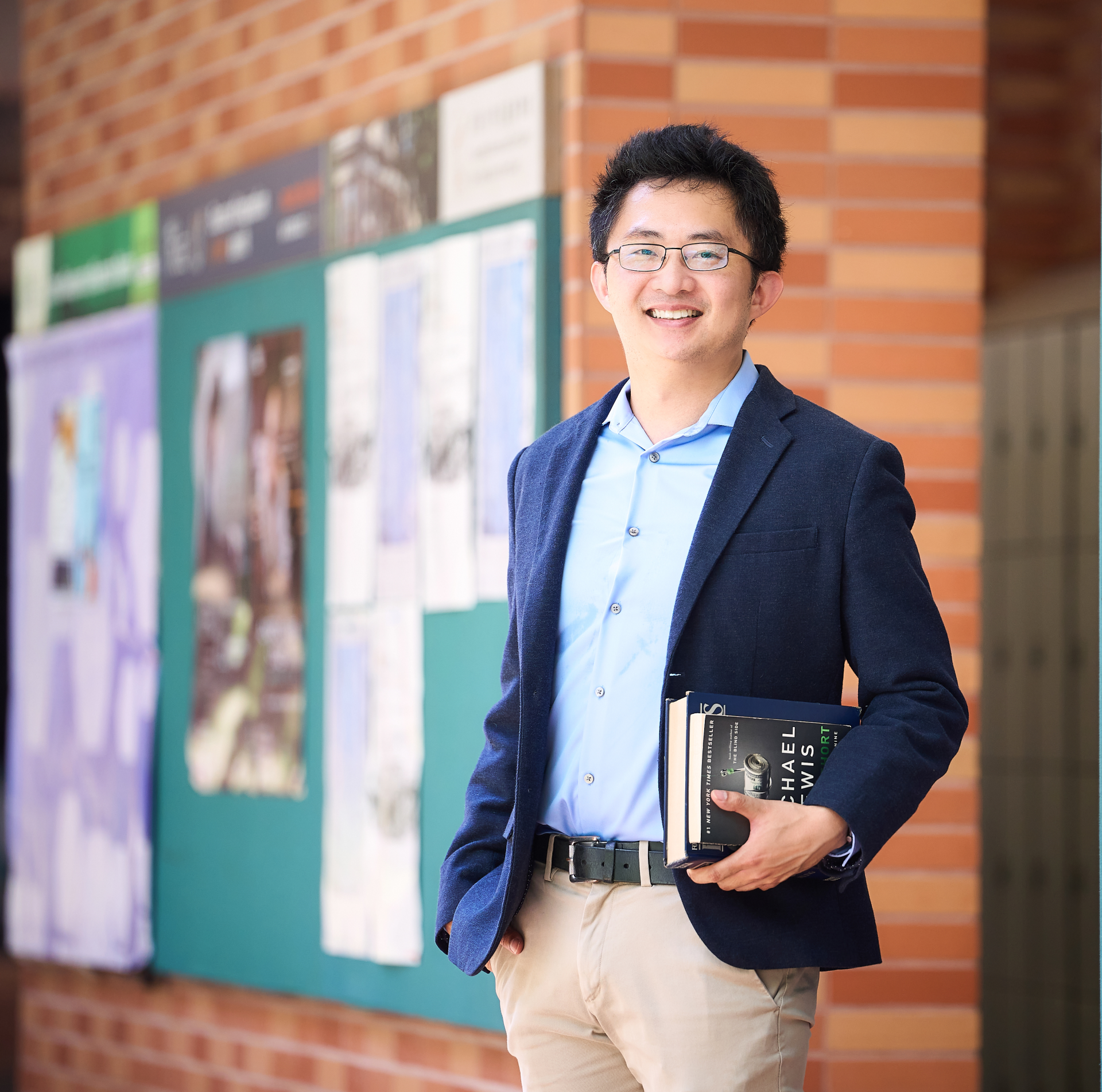
Prof. Alan P. KWAN
Programme Director
Master of Finance in Financial Technology
Why Master of Finance in Financial Technology
The HKU Business School Master of Finance in Financial Technology (MFFinTech) programme is jointly offered by three faculties: the Business School, the School of Computing and Data Science and the Faculty of Law. Our faculty members are involved in cutting-edge research and have accumulated experience to nurture the FinTech talents and ensure all students are taught the most up-to-date technological advancements. Our innovative curriculum balances quantitative skills and visionary thinking, and applies techniques of big data, AI and natural language processing to analyse real-world financial projects. Students will also cover the legal aspects of FinTech, from cybersecurity to data protection and smart contracts.
Welcome to the Master of Finance in Financial Technology Programme at HKU Business School. Below are the 5 questions from our candiates that answered by Prof. Kwan for you to catch a glimpse of the MFFinTech Programme.
Expand All
Collapse All
This masters programme is very interdisciplinary. What are the other faculties involved?
Led by the HKU Business School, the Master of Finance in FinTech programme features a strong multidisciplinary training, with courses jointly offered by the School of Computing and Data Science and the Faculty of Law. Students are able to acquire cutting-edge technical skills and a broad understanding of potential legal, economic and societal impacts of FinTech and digitalisation.
What type of student is suitable to study the Master of Finance in FinTech?
The programme is designed for those who are interested in the financial technology sector, as they would learn new competencies in new technologies such as big data, artificial intelligence and blockchain, etc. Students with computer science, engineering, mathematics, physics, statistics or science and technology related disciplines are preferred, but above all else, a willingness to learn whatever one’s initial background. Many students without technical backgrounds are highly successful in the program. Graduates are expected to be technologically adept, business savvy and able to offer innovative solutions to finance-related industries.
Why did we revamp the FinTech Stream under the Master of Finance to Master of Finance in Financial Technology?
Carving out as a standalone program allows us to provide a more comprehensive and tailored program to our students. This new program builds upon our previous Master of Finance FinTech stream, but brings in the expertise of the Faculty of Engineering and Faculty of Law, allowing us to special course offerings. The curriculum of this Master Programme enhances the learning experience, allowing our graduates to be more well-rounded in skills and expertise.
What is the difference between the Master of Finance and the Master of Finance in FinTech Programme?
The Master of Finance in FinTech gives students much of the same holistic knowledge of finance, but in terms of technical skills, focuses on those that FinTech jobs specifically require. The emphasis is on quantitative and analytical skills as well as practical experience, by employing technological innovations in financial practices.
What are the job opportunities?
The financial sector is evolving rapidly in the digital age. We like to think of this program as appropriate for both students who want to enter traditional financial jobs but with extra technical skills as well as the fintech or technology industry. While many of our students do aspire to become quant researchers, data scientists or enter technical roles, many of our students enter traditional finance jobs as well. The onslaught of data and powerful computing power demands new thinking and continuous innovation and affects all financial institutions, both incumbents and entrants. FinTech startups and established companies have to adopt new ways of thinking and anticipate what will come next in response to this technology evolution. FinTech skills are in high demand.
## Our Faculty
[](https://www.hkubs.hku.hk/people/henri-arslanian/)
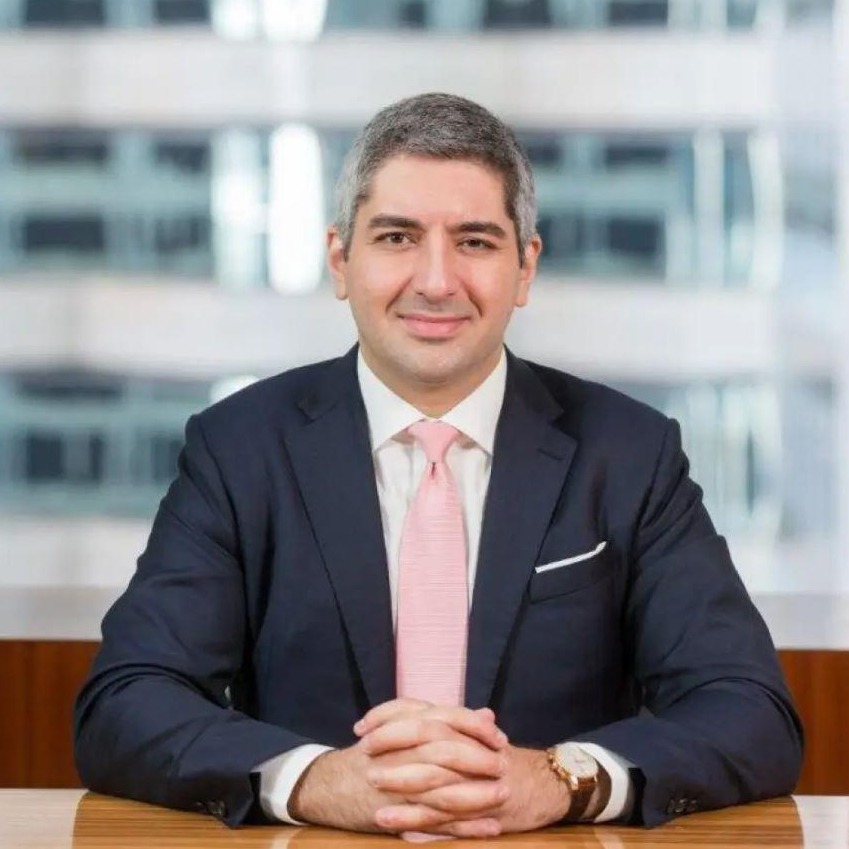
[Prof. Henri ARSLANIAN](https://www.hkubs.hku.hk/people/henri-arslanian/)
Adjunct Associate Professor, PwC FinTech & Crypto Leader for Asia and Chairman of the FinTech Association of Hong Kong
[](https://www.hkubs.hku.hk/people/matthias-buehlmaier)
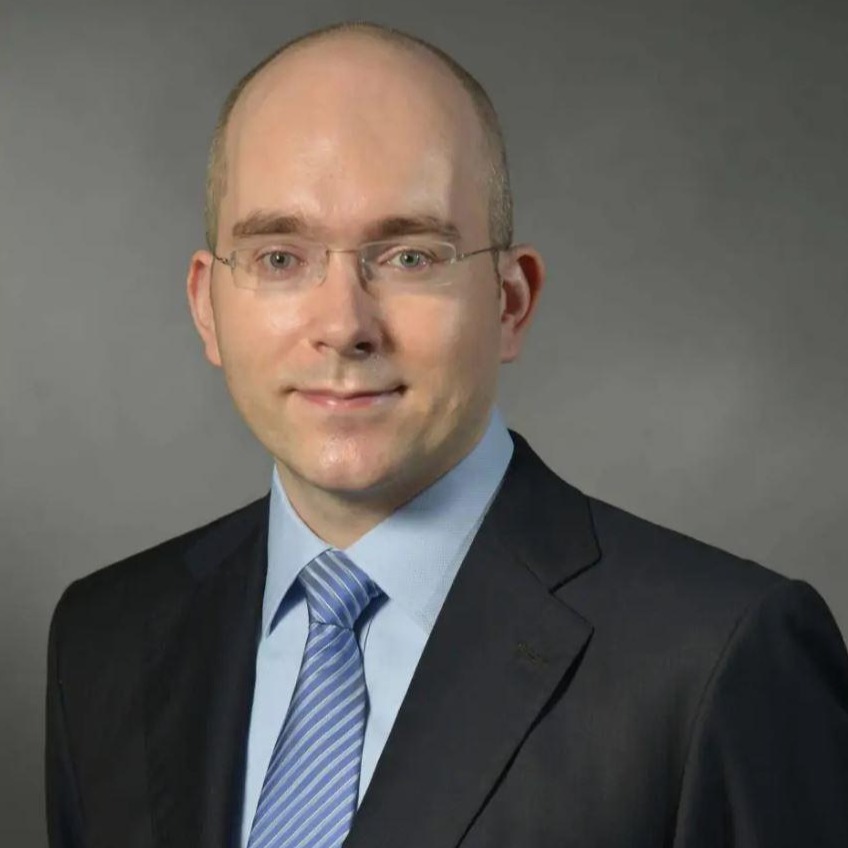
[Prof. Matthias BUEHLMAIER](https://www.hkubs.hku.hk/people/matthias-buehlmaier)
Ph.D., Vienna Graduate School of Finance (WU Vienna), Austria
[](https://www.hkubs.hku.hk/people/hongye-guo/)
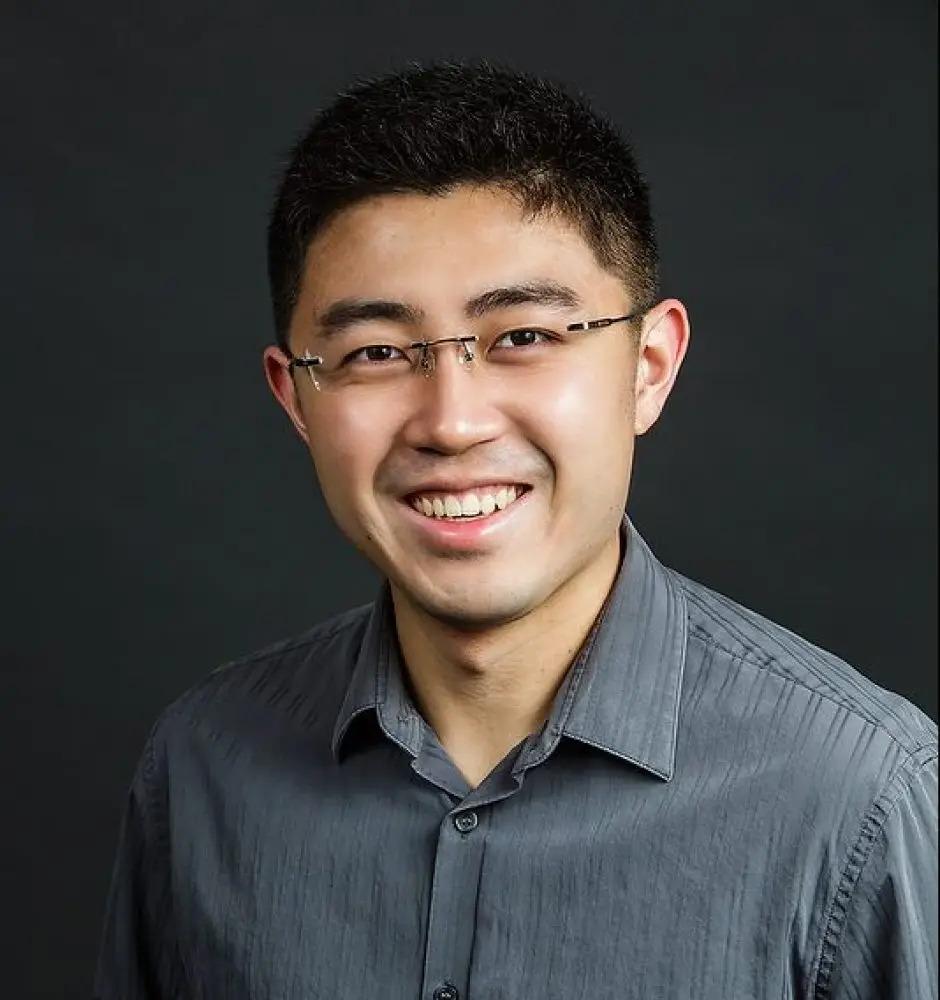
[Prof. Hongye GUO](https://www.hkubs.hku.hk/people/hongye-guo/)
PhD., The Wharton School, University of Pennsylvania, United States
[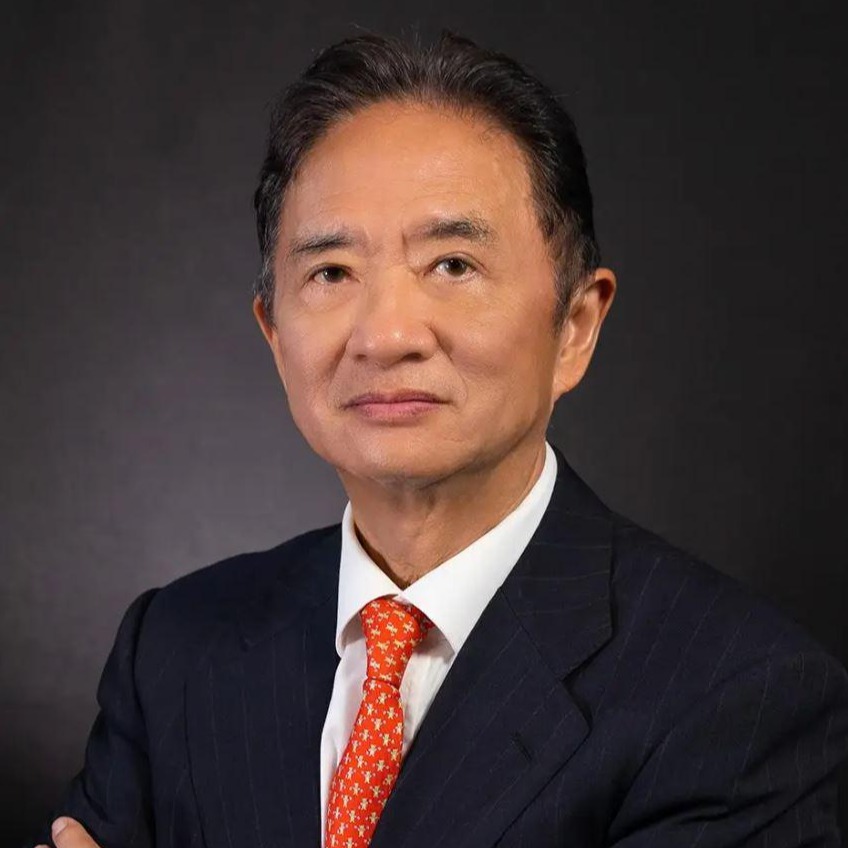](https://www.hkubs.hku.hk/people/berry-hsu/)
[Prof. Berry HSU](https://www.hkubs.hku.hk/people/berry-hsu/)
Honorary Professor
[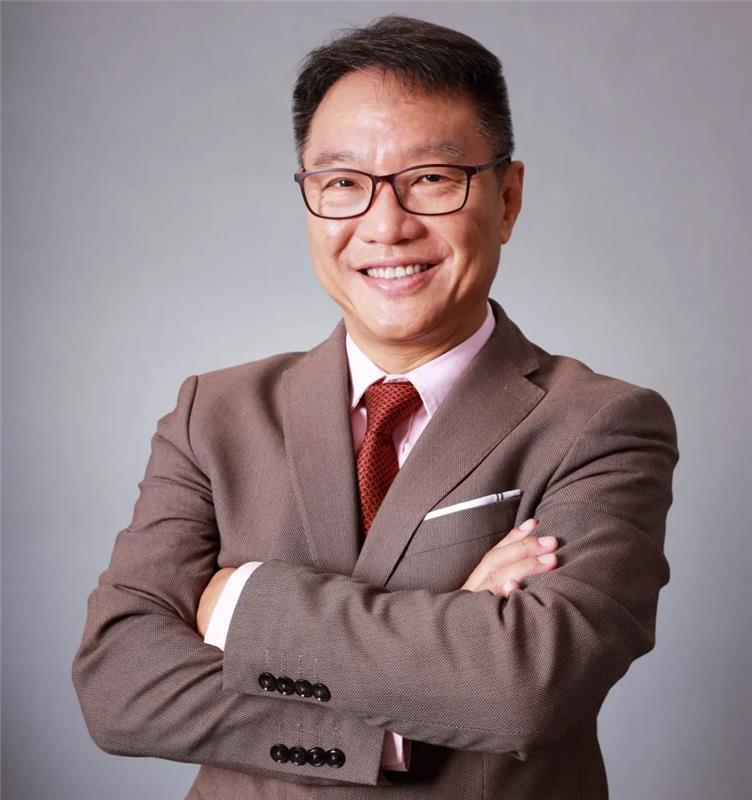](https://www.hkubs.hku.hk/people/alan-kin-san-chow/)
[Prof. Alan Kin San CHOW](https://www.hkubs.hku.hk/people/alan-kin-san-chow/)
Adjunct Professor
[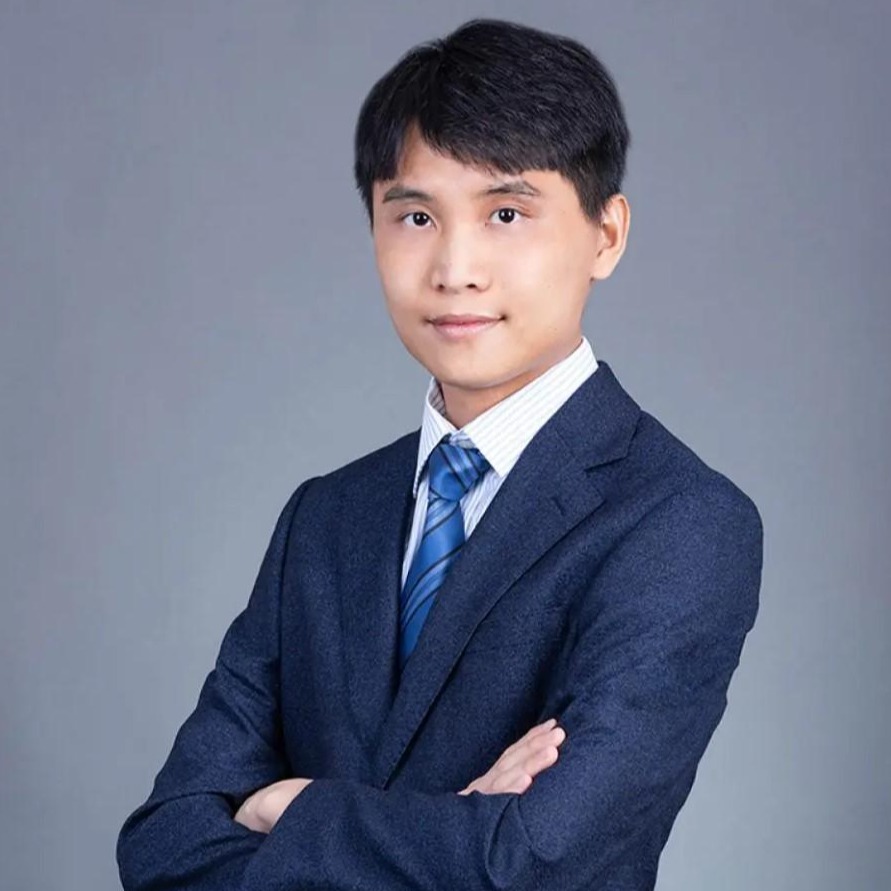](https://www.hkubs.hku.hk/people/jiantao-huang/)
[Prof. Jiantao HUANG](https://www.hkubs.hku.hk/people/jiantao-huang/)
Ph.D., London School of Economics, England
[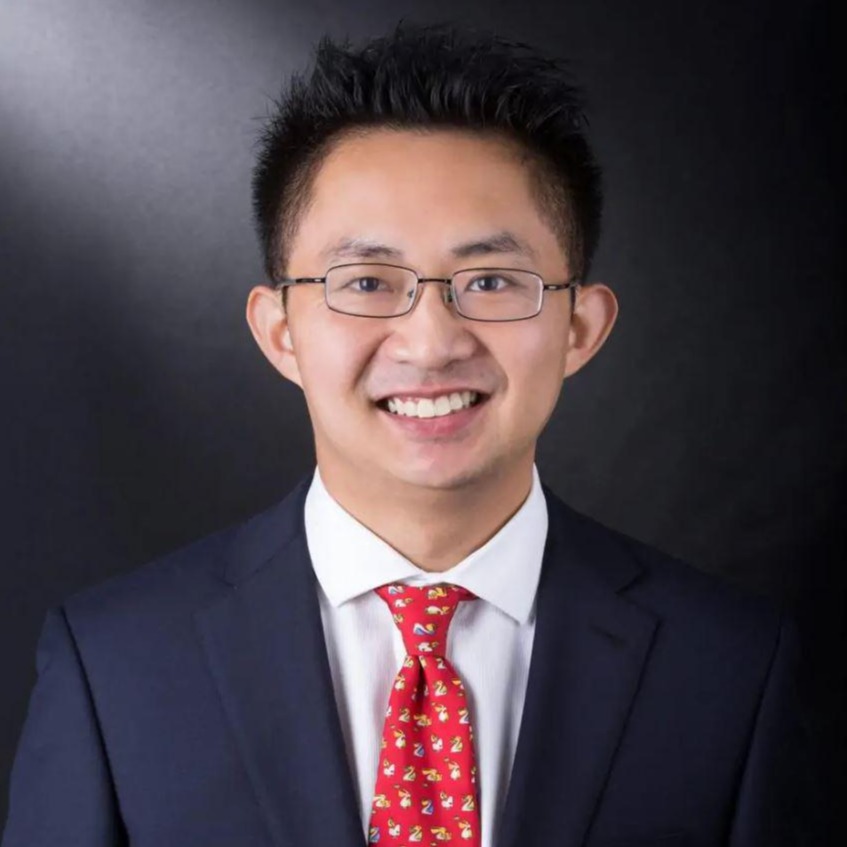](https://www.hkubs.hku.hk/people/alan-p-kwan)
[Prof. Alan P. KWAN](https://www.hkubs.hku.hk/people/alan-p-kwan)
MFFinTech Programme Director
[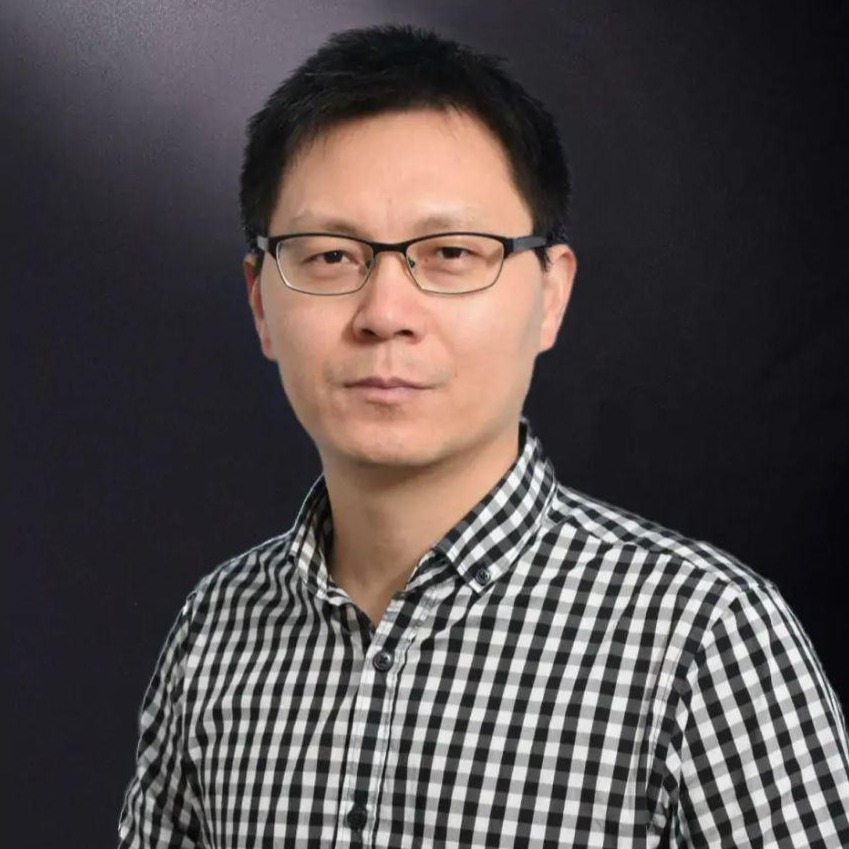](https://www.hkubs.hku.hk/people/xuewen-liu)
[Prof. Xuewen LIU](https://www.hkubs.hku.hk/people/xuewen-liu)
Ph.D., London School of Economics, United Kingdom
[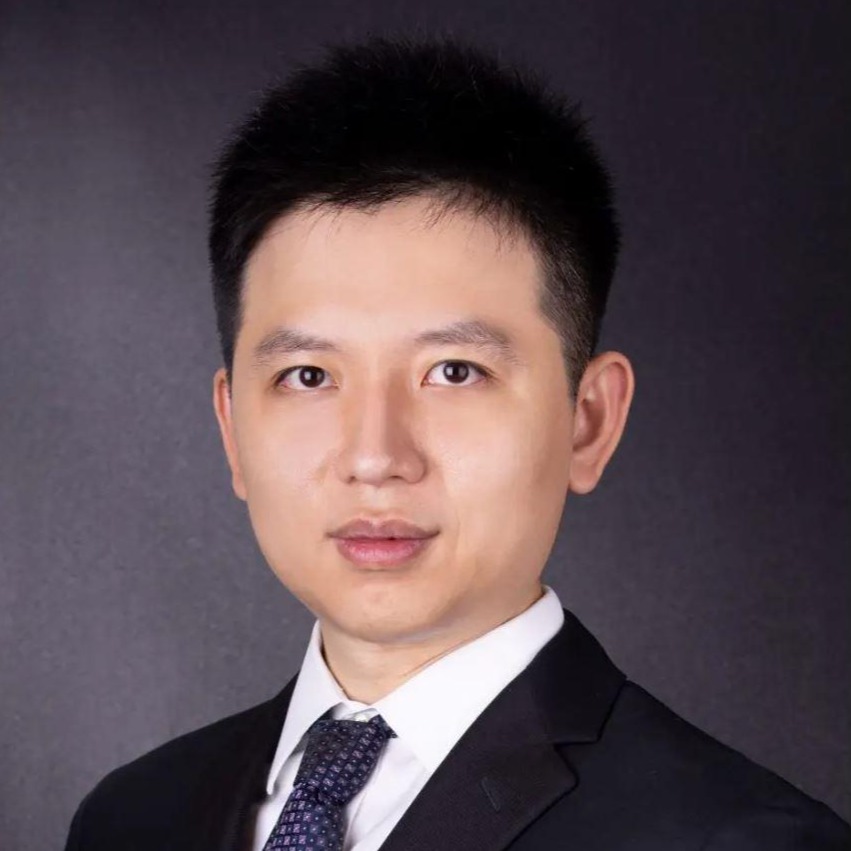](https://www.hkubs.hku.hk/people/fangzhou-lu)
[Prof. Fangzhou LU](https://www.hkubs.hku.hk/people/fangzhou-lu)
Ph.D., Massachusetts Institute of Technology, United States
[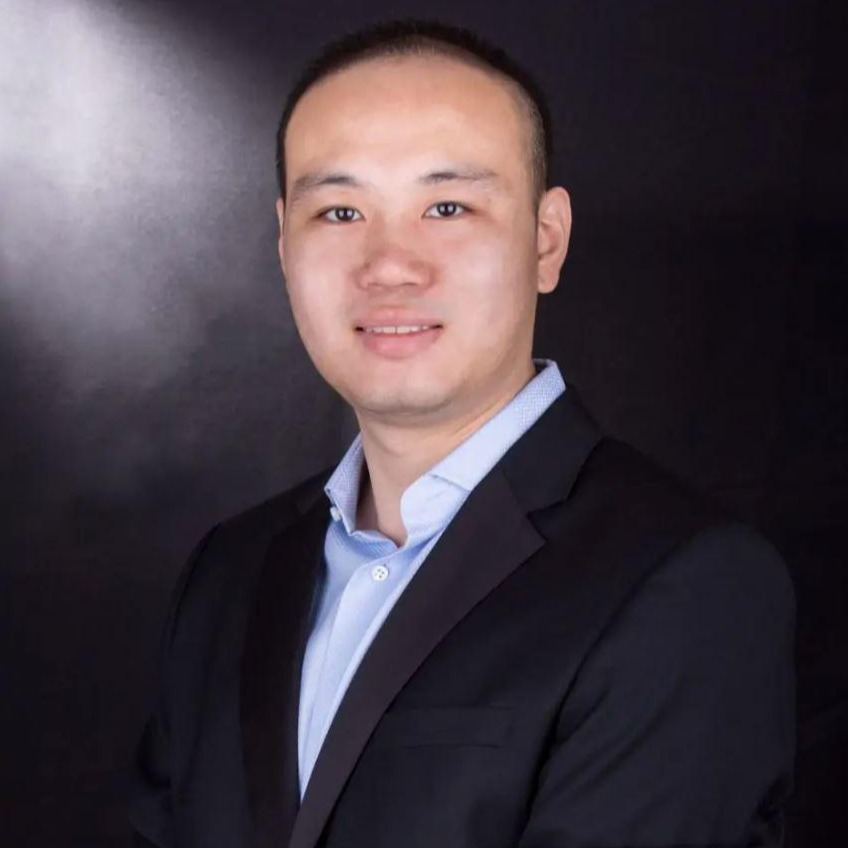](https://www.hkubs.hku.hk/people/ye-luo)
[Prof. Ye LUO](https://www.hkubs.hku.hk/people/ye-luo)
Ph.D., Masschusetts Institute of Technology, United States
[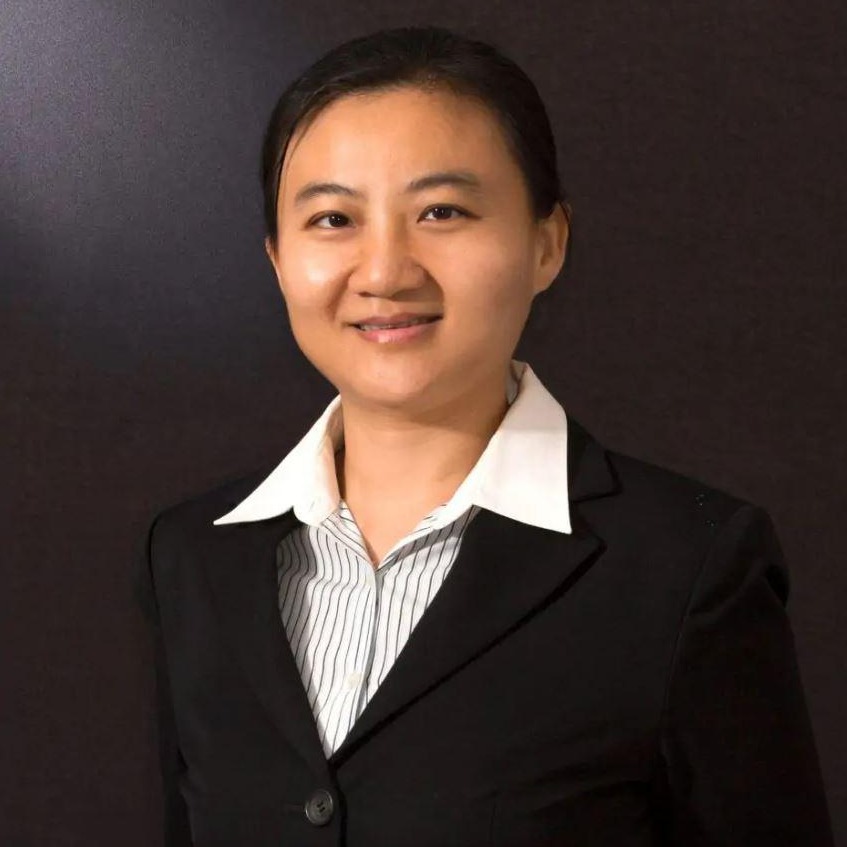](https://www.hkubs.hku.hk/people/rujing-meng)
[Prof. Rujing MENG](https://www.hkubs.hku.hk/people/rujing-meng)
Ph.D., Fuqua School of Business, Duke University, United States
[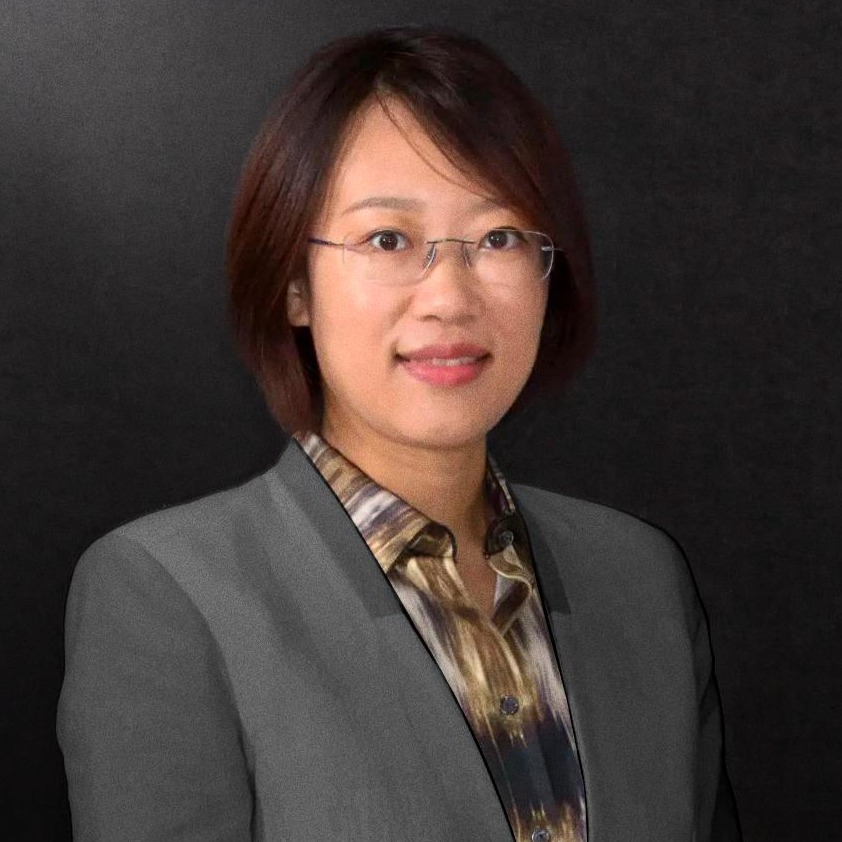](https://www.hkubs.hku.hk/people/jinghan-meng)
[Dr. Jinghan MENG](https://www.hkubs.hku.hk/people/jinghan-meng)
Ph.D., University of North Carolina, Chapel Hill, United States
[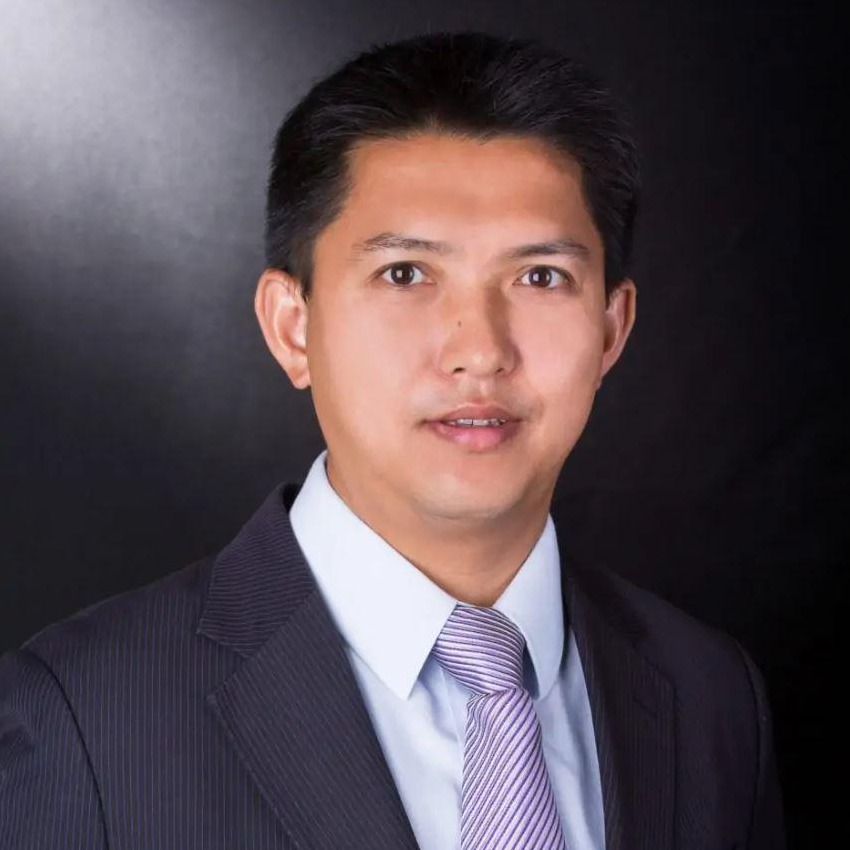](https://www.hkubs.hku.hk/people/dragon-yongjun-tang)
[Prof. Dragon Yongjun TANG](https://www.hkubs.hku.hk/people/dragon-yongjun-tang)
MSAF Programme Director
[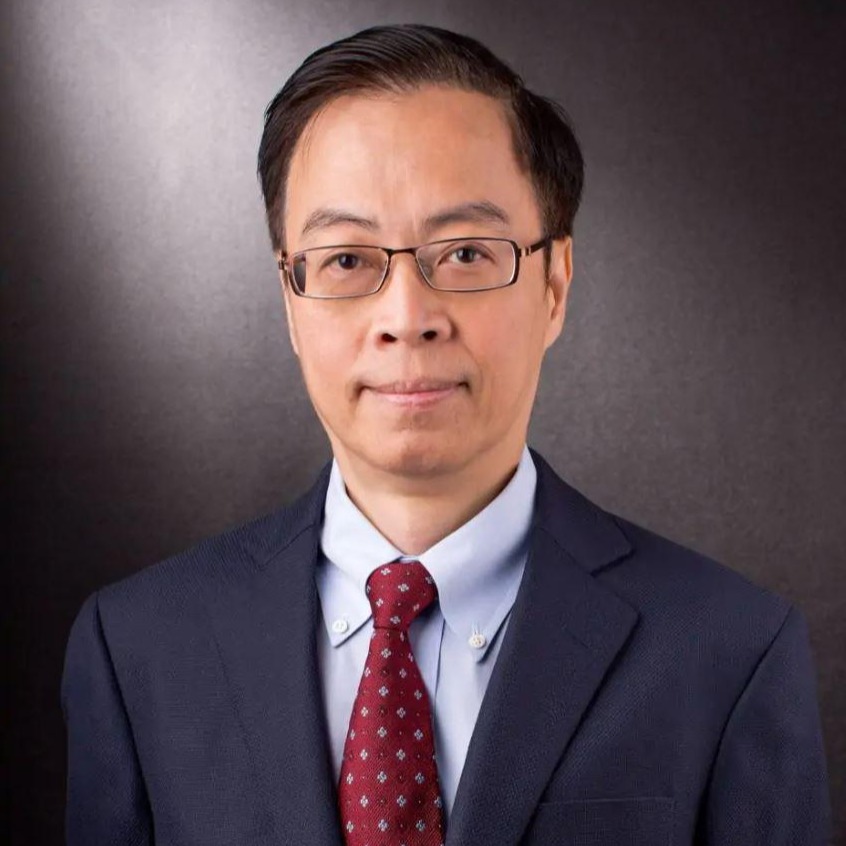](https://www.hkubs.hku.hk/people/maurice-k-s-tse)
[Prof. Maurice K.S. TSE, JP](https://www.hkubs.hku.hk/people/maurice-k-s-tse)
Ph.D. in Finance, Michigan State University, United States
[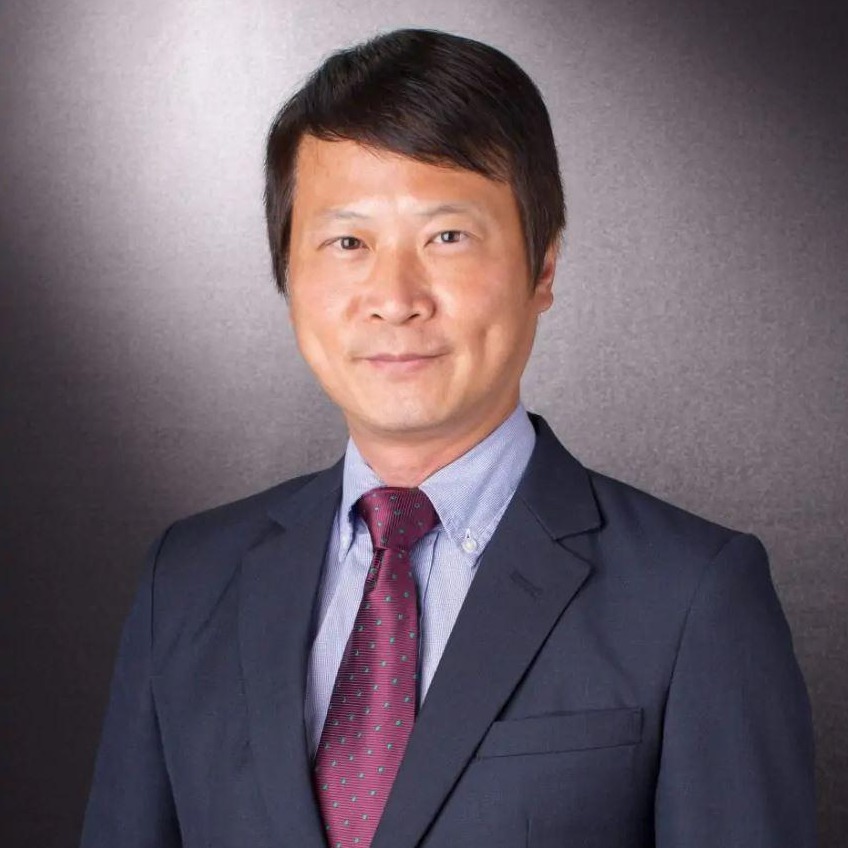](https://www.hkubs.hku.hk/people/keith-k-p-wong)
[Prof. Keith K.P. WONG](https://www.hkubs.hku.hk/people/keith-k-p-wong)
Ph.D., University of British Columbia, Canada
[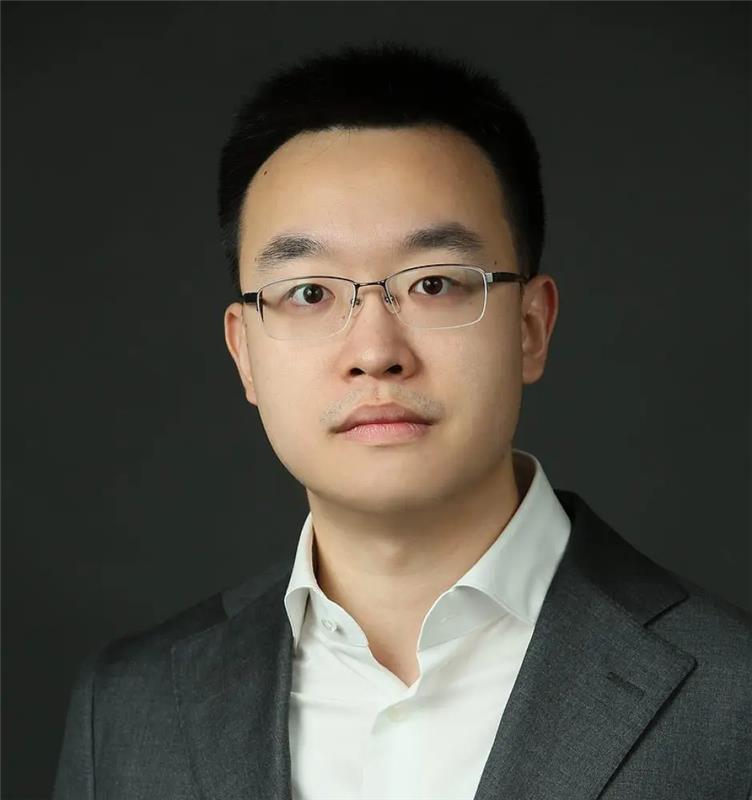](https://www.hkubs.hku.hk/people/jack-xiaoyong-fu/)
[Prof. Jack Xiaoyong FU](https://www.hkubs.hku.hk/people/jack-xiaoyong-fu/)
Ph.D. in Finance, The Wharton School, University of Pennsylvania, United States
[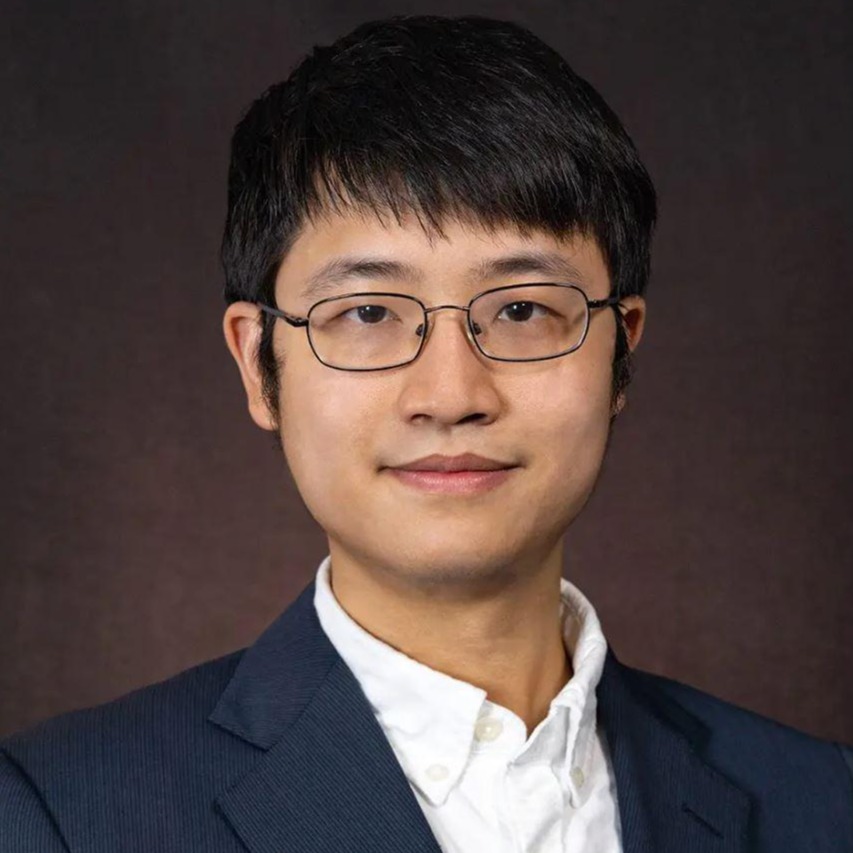](https://www.hkubs.hku.hk/people/yang-you/)
[Prof. Yang YOU](https://www.hkubs.hku.hk/people/yang-you/)
Ph.D., Harvard University, United States
[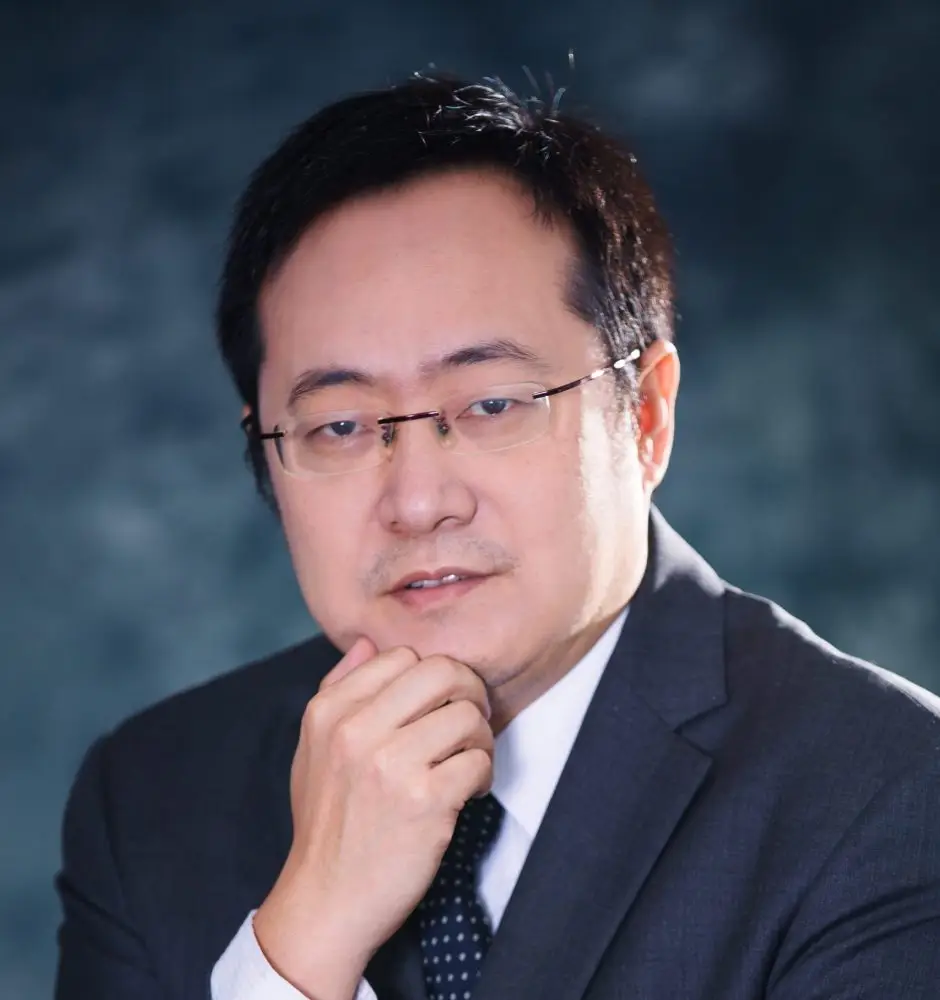](https://www.hkubs.hku.hk/people/tao-wang/)
[Prof. Tao WANG](https://www.hkubs.hku.hk/people/tao-wang/)
Ph.D. in Engineering Systems, Massachusetts Institute of Technology, United States
[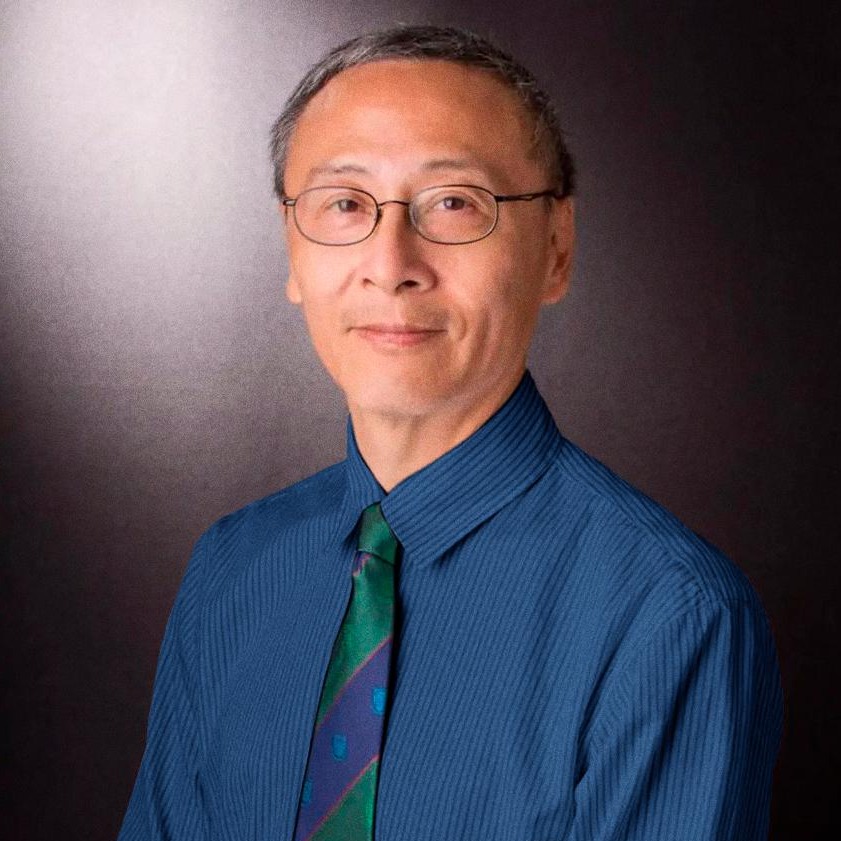](https://www.hkubs.hku.hk/people/jimmy-woo)
[Mr. Jimmy Jack-man WOO](https://www.hkubs.hku.hk/people/jimmy-woo)
Adjunct Associate Professor
[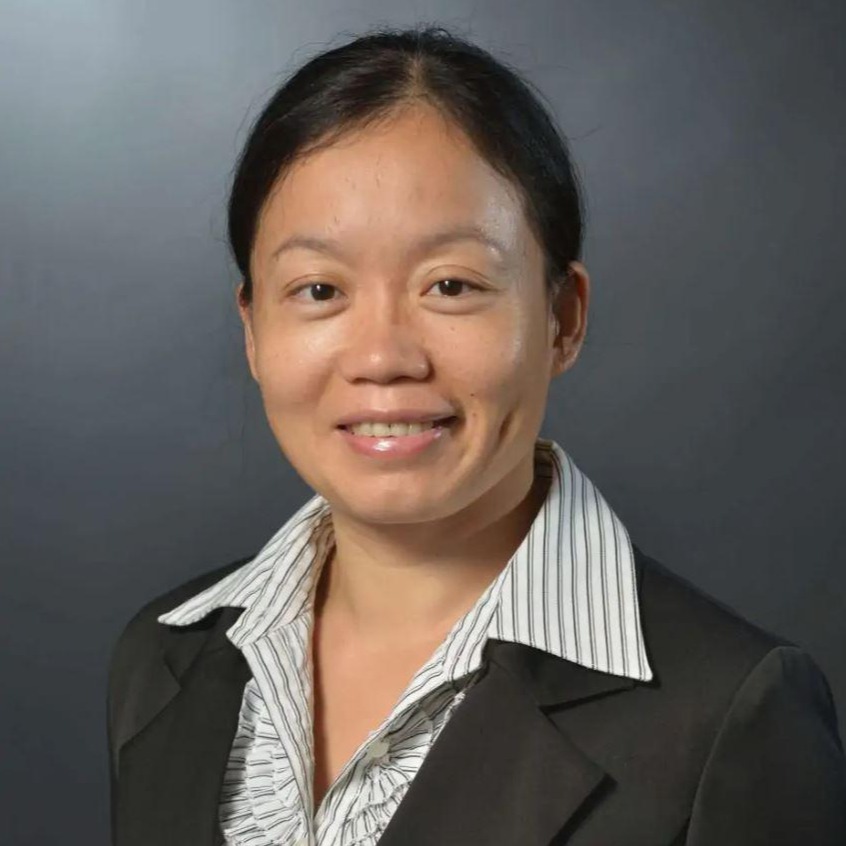](https://www.hkubs.hku.hk/people/huiyan-qiu)
[Dr. Huiyan QIU](https://www.hkubs.hku.hk/people/huiyan-qiu)
Ph.D., M.S., University of Minnesota, United States
[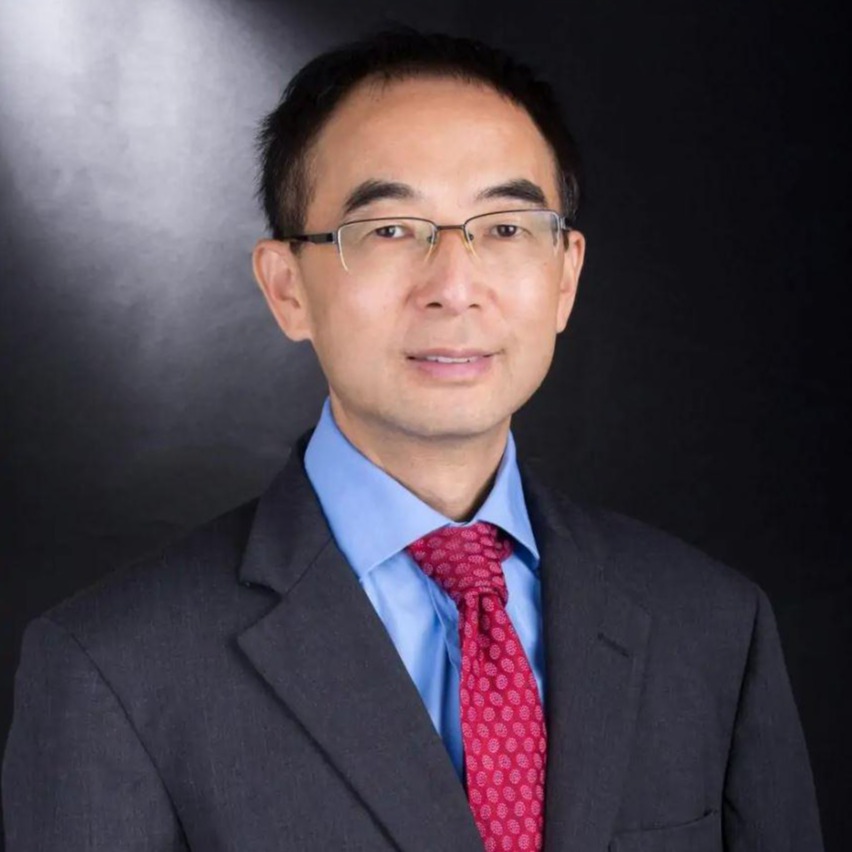](https://www.hkubs.hku.hk/people/tingjun-liu)
[Prof. Tingjun LIU](https://www.hkubs.hku.hk/people/tingjun-liu)
Ph.D., Carnegie Mellon University, United States
[](https://www.hkubs.hku.hk/people/pingyang-gao)
[Prof. Pingyang GAO](https://www.hkubs.hku.hk/people/pingyang-gao)
Associate Dean (Research and Knowledge Exchange)
Ph.D., Yale University, 2008
## Curriculum Structure
Students are required to complete a total of 12 courses including:
+++=
4
Fundamental
Core Courses
5
Advanced
Core Courses
2
Elective
Courses
1
Capstone
Course
12
Total
Courses
Course Detail
Fundamental Core Courses
Advanced Core Courses
Elective Courses
Capstone Course
Fundamental Core Courses
Remark: Not all of the courses listed will necessarily be offered each year and the listed courses are subject to further adjustments.
Master of Accounting Electives (Minimum 1)
Expand All
Collapse All
LLAW6093
Regulation of Financial Markets (9 credits)
The course will examine, from legal and policy perspectives, the fundamentals respecting regulation of the primary financial intermediaries and markets: i.e., money and banking, investment banking, and asset management and insurance. Emphasis will be on the on-going phenomenon of globalisation and interdependence/interconnection of financial markets and intermediaries, and the need for economies to develop viable and robust financial markets, with a particular focus on the current global financial crisis. Use of international, comparative (especially PRC, US and EU) and interdisciplinary materials will be made.
MFIN7002
Investment Analysis and Portfolio Management (6 credits)
This course aims to provide candidates with understanding of (i) fundamental knowledge for asset valuation, (ii) portfolio management techniques for risk management and speculation, (iii) investment strategies adopted in financial market, and (iv) the recent development of portfolio management tools and investment strategies. On the theoretical side, this course introduces fundamental knowledge for asset pricing, investment strategies, and portfolio management. On the practical side, this course covers recent topics that are related to the investment strategies and portfolio management in both Hong Kong and United States. Some projects about portfolio management and asset valuation are specially designed to let candidates apply the theoretical knowledge into practice. This course is highly recommended for candidates who intend to pursue a career or further studies in investment strategies and portfolio management. Of course, the knowledge will also be very useful when candidates make their own personal investment decision.
MFIN7005
Corporate Finance and Asset Valuation (6 credits)
This course aims to provide candidates with understanding of (i) fundamental approaches for equity valuation, (ii) fundamental approaches for valuation of fixed income securities, (iii) the knowledge about corporate finance and behavioral approaches in asset valuation, and (iv) the recent development of valuation techniques. On the theoretical side, this course introduces fundamental knowledge for asset valuation, investment strategies, and portfolio management. On the practical side, this course covers recent topics that are related to the asset valuation techniques used in both Hong Kong and United States. Some projects about asset valuation are specially designed to let candidates apply the theoretical knowledge into practice. This course is highly recommended for candidates who intend to pursue a career or further studies in equity valuation and securities analysis. Certainly, the knowledge from this course will also be very useful when you make your own personal investment decision.
FITE7409
Blockchain and Cryptocurrency (6 credits)
In this course, students will learn the rationales behind the design of blockchain and cryptocurrency, the key technical/cryptographic elements that build up the blockchain technology, classifications of different types of blockchains, the comparisons of different blockchain platforms, what applications fit the best for the blockchain technology, and example applications in a wide range of disciplines. This course will also introduce some popular cryptocurrencies, e.g. Bitcoin, discuss in details about bitcoin transactions, briefly introduce what a cryptocurrency exchange is, and the evil sides of cryptourrencies (e.g. being the ransoms of ransomeware and money laundry).
Course Exemption & Advanced Standing
**Course Exemption**
Course exemption of up to two required courses, except the capstone course, may be granted (normally by examination) if candidates:
1\. Produce evidence, such as a transcript and course syllabus, that a course is equivalent in content to another course taken elsewhere for which a satisfactory grade has been obtained, or
2\. Are holding relevant professional qualifications which were obtained before admission to the programme.
No credits will be given for the exempted course and candidates shall be required to take an approved alternative course of the same credit value.
**Advanced Standing**
Advanced standing of up to two required courses, except the capstone course, may be granted if:
1\. The course is completed at a graduate, postgraduate or master level from a recognized programme elsewhere within the last four years before admission to the programme and a good grade in the course was achieved, or
2\. The candidate possesses a relevant professional qualification which was obtained before admission to the programme.
In such cases, no replacement courses will be required and the tuition fees will be adjusted accordingly.
Applications for course exemption and advanced standing are subject to the approval of the Master of Finance in Financial Technology Programme Director and committees concerned.
\*Remarks: Students who have successfully completed Level II or above of the CFA examination can be granted Advanced Standing and/ or Course Exemption of two of the Fundamental Core Courses. Students who have obtained other professional qualifications, including but not limited to ACCA, CGA, CPA, FRM and PRM, can also apply to be exempted from certain core courses.
Other Masters Programmes \*\*
Expand All
Collapse All
MAA / MAIB / MEcon / MFin / MFFintech / MGM / MSc(BA) / MSc(Mktg) / MSAF / MWM Electives
You can take up to two electives from the Master of Accounting Analytics, Master of Artificial Intelligence in Business, Master of Economics, Master of Finance, Master of Finance in Financial Technology, Master of Global Management, Master of Science in Business Analytics, Master of Science in Marketing, Master of Sustainable Accounting and Finance, or Master of Wealth Management programme at HKU. Enrollment in electives from other programmes is subject to seat availability and approval by the Programme Directors concerned based on your profile, capabilities and performance in the MAcct programme.
Since enrollment in other taught postgraduate electives is not guaranteed, you should always choose four MAcct electives during the course enrollment in our programme. Course enrollment results of other programmes may only be confirmed after that course has started. If your enrollment is successful, you can drop the MAcct elective(s) and enroll in the other taught postgraduate elective(s).
It is your responsibility to make sure you obtain 72 credits to fulfill the graduation requirements and there is no overlapping of classes and exams in courses from different programmes.
_\*The list of available electives from other programmes may have prerequisite requirement(s) and is subject to change for future intakes._
Back to Top
Advanced Core Courses
Remark: Not all the courses listed will necessarily be offered each academic year and the listed courses are subject to further adjustments.
Master of Accounting Electives (Minimum 1)
Expand All
Collapse All
MFIN6003
Derivative Securities (6 credits)
Derivatives have become a popular hedging and investment tool over the last few decades and derivatives concept are required for every advanced finance topic. This course provides candidates with a framework (1) to understand the fundamental concepts of derivative products (forward and futures, options, swaps, and basic structured products), (2) to develop the necessary skills used in valuing derivative contracts, and (3) to understand a wide variety of issues related to risk management and investment decisions using derivatives. The course intends to provide a solid foundation for other 2 advanced courses of the program such as mathematical finance, risk management, fixed income securities, and financial engineering.
MFIN7003
Mathematical Techniques in Finance (6 credits)
There are three main approaches to mathematical finance: the tree approach, the martingale approach and the partial differential equation approach. This course will present these three approaches and their applications to pricing and hedging financial derivatives. The corresponding numerical methods of the three approaches are lattice method, Monte Carlo simulation method, and finite difference method. Along the lectures, necessary mathematics, such as calculus, partial differential equation, applied probability and stochastic calculus will also be reviewed. After taking this course, candidates should be able to fully understand no-arbitrage theory, risk-neutral probability, martingale, and Black-Scholes equation. The purpose of this course is to lay down a solid mathematical foundation for candidates to learn more advanced topics in financial engineering and risk management, such as exotic options, interest rate derivatives and credit risk models.
Prerequisite: MFIN6003 Derivative Securities
MFIN7033
Advanced Financial Programming and Databases (6 credits)
This course provides students a foundation in managing and analyzing financial datasets as well as other datasets. The first part of the course focuses on building skills – data manipulation using programming languages. The second part introduces various financial databases. Through practice on real-world financial datasets, students will learn methods used to warehouse and retrieve data for statistical computing. The course then turns to analytical methods with a focus on demonstrating these methods on real-data from various contexts in finance. Methods covered include statistical modeling and inference, machine learning, textual analysis, classification and alternative datasets. Problem sets and projects will be the primary mode of learning. Course learning will be supplemented with exposure to industry speakers from the local financial industry.
MFIN7034
Machine Learning and Artificial Intelligence in Finance (6 credits)
Machine learning and artificial intelligence are the apex technologies of the information era. These methods are getting increasingly popular in the financial market. This course provides students the fundamental models and methods of machine learning and apply them to solve real-world financial problems. The topics include regression, classification, clustering methods, model selection, topic modeling and policy search. The first part of the course focuses on supervised learning techniques for regression and classification. The second part of the course covers unsupervised learning techniques for clustering and matrix factorization. The third part of the course covers reinforcement learning algorithm. The last part provides the fundamental concepts of artificial intelligence and its implications. The course provides introductions to the latest datasets in financial markets and practices applying learning algorithms to these datasets in a variety of topics. The primary mode of learning is based on assignments and projects.
MFIN7037
Quantitative Trading (6 credits)
This course provides a foundation for advanced quantitative trading in financial markets. The course has two parts. First, the course reviews stylized facts and methods used for time-series predictability, cross-sectional asset pricing and strategy performance evaluation. The second part of the course uses these tools to study recent advances in investment strategies sourcing from academic and practitioner literature. For example, the course will discuss new theories on risk premia, intermediation-based asset pricing, and quantifiable soft information and alternative data. The primary method of learning will be a combination of problem sets and projects. Subject to availability, learning will be supplemented with exposure to industry speakers from the local financial industry.
Prerequisite: MFIN7002 Investment Analysis and Portfolio Management
Course Exemption & Advanced Standing
**Course Exemption**
Course exemption of up to two required courses, except the capstone course, may be granted (normally by examination) if candidates:
1\. Produce evidence, such as a transcript and course syllabus, that a course is equivalent in content to another course taken elsewhere for which a satisfactory grade has been obtained, or
2\. Are holding relevant professional qualifications which were obtained before admission to the programme.
No credits will be given for the exempted course and candidates shall be required to take an approved alternative course of the same credit value.
**Advanced Standing**
Advanced standing of up to two required courses, except the capstone course, may be granted if:
1\. The course is completed at a graduate, postgraduate or master level from a recognized programme elsewhere within the last four years before admission to the programme and a good grade in the course was achieved, or
2\. The candidate possesses a relevant professional qualification which was obtained before admission to the programme.
In such cases, no replacement courses will be required and the tuition fees will be adjusted accordingly.
Applications for course exemption and advanced standing are subject to the approval of the Master of Finance in Financial Technology Programme Director and committees concerned.
\*Remarks: Students who have successfully completed Level II or above of the CFA examination can be granted Advanced Standing and/ or Course Exemption of two of the Fundamental Core Courses. Students who have obtained other professional qualifications, including but not limited to ACCA, CGA, CPA, FRM and PRM, can also apply to be exempted from certain core courses.
Other Masters Programmes \*\*
Expand All
Collapse All
MAA / MAIB / MEcon / MFin / MFFintech / MGM / MSc(BA) / MSc(Mktg) / MSAF / MWM Electives
You can take up to two electives from the Master of Accounting Analytics, Master of Artificial Intelligence in Business, Master of Economics, Master of Finance, Master of Finance in Financial Technology, Master of Global Management, Master of Science in Business Analytics, Master of Science in Marketing, Master of Sustainable Accounting and Finance, or Master of Wealth Management programme at HKU. Enrollment in electives from other programmes is subject to seat availability and approval by the Programme Directors concerned based on your profile, capabilities and performance in the MAcct programme.
Since enrollment in other taught postgraduate electives is not guaranteed, you should always choose four MAcct electives during the course enrollment in our programme. Course enrollment results of other programmes may only be confirmed after that course has started. If your enrollment is successful, you can drop the MAcct elective(s) and enroll in the other taught postgraduate elective(s).
It is your responsibility to make sure you obtain 72 credits to fulfill the graduation requirements and there is no overlapping of classes and exams in courses from different programmes.
_\*The list of available electives from other programmes may have prerequisite requirement(s) and is subject to change for future intakes._
Course Exemption & Advanced Standing
**Course Exemption**
Course exemption of up to two required courses, except the capstone course, may be granted (normally by examination) if candidates:
1\. Produce evidence, such as a transcript and course syllabus, that a course is equivalent in content to another course taken elsewhere for which a satisfactory grade has been obtained, or
2\. Are holding relevant professional qualifications which were obtained before admission to the programme.
No credits will be given for the exempted course and candidates shall be required to take an approved alternative course of the same credit value.
**Advanced Standing**
Advanced standing of up to two required courses, except the capstone course, may be granted if:
1\. The course is completed at a graduate, postgraduate or master level from a recognized programme elsewhere within the last four years before admission to the programme and a good grade in the course was achieved, or
2\. The candidate possesses a relevant professional qualification which was obtained before admission to the programme.
In such cases, no replacement courses will be required and the tuition fees will be adjusted accordingly.
Applications for course exemption and advanced standing are subject to the approval of the Master of Finance in Financial Technology Programme Director and committees concerned.
\*Remarks: Students who have successfully completed Level II or above of the CFA examination can be granted Advanced Standing and/ or Course Exemption of two of the Fundamental Core Courses. Students who have obtained other professional qualifications, including but not limited to ACCA, CGA, CPA, FRM and PRM, can also apply to be exempted from certain core courses.
Back to Top
Elective Courses
Apart from choosing both elective courses from MFFinTech electives list, students may take one of the two elective courses offered by the School of Computing and Data Science, and/or one of the two electives offered by the Faculty of Law. Up to two electives may be chosen from other taught postgraduate curricula (including Master of Finance) offered by the Business School under the advice and approval of the Programme Directors concerned. Please refer to section at the end of this page for further details.
Remark: Not all of the courses listed will necessarily be offered each year and the listed courses are subject to further adjustments.
Master of Accounting Electives (Minimum 1)
Expand All
Collapse All
MFIN7049
Money, Financial Institutions and Markets
This is an advanced course on financial system. The course aims to enable students to have a big-picture view and a deep understanding on how the financial system operates. Financial investors and corporate managers make decisions within a large, interlinked, complex financial system. This system includes many players with different preferences, many financial instruments with different payoff structures, many financial contracting designs with different rules. A financial practitioner or researcher needs to have working knowledge on the operation of the financial system. Understanding the operation of the financial system is also crucial for understanding some extreme events in financial markets (e.g. financial crises, market crashes); indeed, those extreme events, occurring within a very short investment period, are responsible for a large portion of the realized returns of financial market investments.
Prerequisite: MFIN7002 Investment Analysis and Portfolio Management
MFIN7052
Green Finance and ESG
This course aims to introduce current development of financial market solutions, i.e., green finance (climate finance) and environmental, social, and governance (ESG) to address climate change problems. This course will cover the topics including green bonds, impact investment, carbon finance, ESG investment, and climate finance. Other related topics are accounting, certification, and reporting of ESG information.
MFIN7057
International Study Field Trip
This course is designed to provide students an opportunity to acquire first-hand knowledge of international business environment. Experiential learning and knowledge exchange will be applied throughout the study field trip to develop students’ understanding of international business environment in a different cultural context and help them construct a global perspective. Firm visits and cultural related activities will be arranged during the study field trip to arouse students’ awareness in cultural diversity and enhance their understanding of how culture can impact international business strategy.
MFIN7058
Renewable Energy Finance
The goal of this course is to provide students an introduction to the topic of renewable energy finance and develop the concepts and practical tools that are essential in this field. The course contains lectures, problem solving exercises, cases, and academic paper reading. Lectures and exercises are used to develop the basic skills, academic paper reading deepens the understanding, and case analyses improve the decision-making ability under complex real-world situations. The course will be case intensive and requires a substantial amount of reading and discussions.
MFIN7060
Fintech cybersecurity and risk management
This is a comprehensive course that equips postgraduate students with the knowledge and skills to navigate the dynamic landscape of Fintech, cybersecurity, and risk management. This course explores the intersection of technology, finance, security and risk management, providing a solid foundation for future professionals in the industry.
MFIN7026
Advanced Corporate Finance
This course is aimed to give candidates a solid understanding of theoretical and empirical contributions of modern corporate finance. Major topics of corporate finance, including valuation, equity offerings, financial leverage, payout policy, and mergers and acquisitions, will be extensively discussed. The course offers candidates an opportunity to appreciate how corporate managers apply financial concepts and theories to managing real business and how financial decisions generate significant impact on firm value. After taking the course, candidates are expected to possess the ability to logically evaluate a firm’s financial decisions and later resolve financial issues in real world.
MFIN7063
Advanced Topics in Investment
This advanced course is designed to equip students with the analytical tools, theoretical frameworks, and practical strategies needed to navigate the complexities of modern financial markets characterized by extreme volatility and Black Swan events. In an era marked by unprecedented market shocks, from the 2020 global market crash triggered by the COVID-19 pandemic to the 2025 trade disruptions caused by aggressive tariff policies, this course delves into the forces driving such extreme volatility and prepares students to make informed investment decisions under Black Swan uncertainty.
MFIN7068
Crypto Finance
This course explores the latest trends in crypto finance, covering Bitcoin, Ethereum, DeFi, stablecoins, RWAs, AI-driven protocols, institutional adoption, DATs, and regulatory shifts. Designed for finance and mathematics students, it blends case studies, real-world applications, and strategic insights from Gracy Chen and top industry leaders. Rather than pure theory, the course focuses on actionable knowledge — how crypto finance operates today, the mistakes of past cycles, and emerging opportunities in institutional crypto, DeFi 3.0, and Web3 venture building.
MFIN7069
Evidence-Based Venture Building
This course teaches students how to go from an initial idea to real problem discovery to market validation to business modeling to lead generation to GTM using AI as a co-founder, and real community demand research as the backbone. The course supports idea refinement but primarily focuses on deep market investigation, AI-enabled prototyping, user validation, business model creation, and go-to-market execution.
MFIN7065
Commodity and Currency Markets – Hedging and Investment Management
The course will introduce basic theories behind the commodity and currency, as well as provide an overview of the relevant spot and derivatives markets. Then the course will go deep into the subject of hedging with commodity and currency derivatives, and the associated special risks such as basis. The course will also cover the important dimension of investment with commodity and currency, with the ultimate purpose of facilitating hedging operations, namely, the timing of hedging operations is critical. To better timing an investment on commodity/currency, one must have deep knowledge in fundamentals as well as the patterns of market sentiment and price fluctuation.
Offered by Business School
Expand All
Collapse All
MFIN7004
Financial Services Regulations (6 credits)
This course provides candidates with the legal background necessary to comply with the regulatory requirements in banking and finance. It covers the legal aspects of corporate governance, the legal framework of banking and finance, and financial products, including derivatives. This course also provides candidates with background on market access in financial services, as China embarks on liberalisation of its financial markets as a member of the WTO.
MFIN7013
Seminar in Commercial Banking and Real Estate Financing (6 credits)
This course covers bank management techniques that include asset and liability management, liquidity and reserve management, credit analysis, loan pricing and off-balance-sheet banking, as well as regulatory issues of commercial banks. It also discusses issues related to mortgage loan products and how real estate risks may affect the market value of mortgages.
MFIN7014
Fund Management and Alternative Investments (6 credits)
Hedge funds are one of the fastest growing sectors of asset management. This course studies the styles of hedge funds and management strategies from an investment decision-making perspective. Topics covered in this module include environment and micro-structure of capital market, investment strategies, quantitative tools, derivative products, investment performance evaluation and discussions of some hedge funds failures. Special attention is given to various practical investment strategies and their risks, including equity selection techniques, market-neutral portfolio constructions, arbitrage strategies, emerging market investment, shortselling problems, etc.
MFIN7015
Behavioral Finance (6 credits)
Behavioral finance uses insights from psychology to understand how biases, heuristics, framing and emotions influences the decisions of individual and professional investors, markets and managers. It describes how and why these suboptimal decisions might deviate from those predicted by traditional financial or economic theory. The course also shows why arbitrageurs such as hedge funds cannot correct but instead choose to ride on the misbehavior and mispricing. The course will explore the implications of investor psychology and limitation to arbitrage in the individual trading behaviors, aggregate stock market and the cross-section of average returns, and corporate finance. How insights of behavioral finance complement the traditional finance paradigm will be examined, so that candidates will gain an understanding of how individuals and institutions actually make financial decisions (descriptive) and guidance on how to improve financial decision making (prescriptive) in themselves and others.
MFIN7016
Real Options and Dynamic Corporate Finance (6 credits)
A real option is a right—not an obligation—to take an action on an underlying real asset. The action may involve, for example, abandoning, expanding, or contracting a project or even deferring the decision until a later time. Real options analysis (ROA) is a tool that helps to quantify the value of a real option. This course provides a synthesis of modern asset pricing and corporate finance via the framework of ROA. The course compares and contrasts ROA with the traditional tools of valuation. The benefits and limitations of ROA in terms of practical applications are also discussed.
MFIN7025
Entrepreneurship in Finance: Hedge Funds, Private Equity and Venture Capital (6 credits)
This course provides students with the foundations and practical knowledge enabling them to launch and manage their own entrepreneurial venture including a hedge fund, private equity, venture capital or asset management firm. Taught as a combination of practical classes and guest lectures by industry professionals, the course covers the entire fund and business launch spectrum including fund structuring, investor capital raising, investor due diligence, regulatory, tax, governance, fund terms, private placement regulations, market trading rules, service provider selection, counterparty selection, employment matters, real estate, technology, operations, etc. The course also covers the investor landscape and investor lifecycle from early stage investors to institutional capital raising from global family offices, fund of funds, endowments, private banks and pension funds. We also cover the ongoing management and deal making of such funds from angel and venture capital early investments to private equity deals and exits. The course also discusses the global trends and industry institutional best practices, the customs and usage in the industry as well as some of the future trends, including FinTech and cybersecurity, and their impact on the industry. This is a very practical course with a heavy emphasis on the latest industry trends and best practices rather than theoretical concepts.
MFIN7029
Asian Financial Markets (6 credits)
This course gives candidates an overview of Asian financial markets, their latest development and future trends so that candidates can better prepare themselves for building their career in finance in the region. It consists of company visits, executive talks/seminars, training, networking and/or cultural activities.
MFIN7030
Current Topics in Finance (6 credits)
This is a special course that deals with various current topics in finance. Topics covered may vary from year to year, depending on the research interests of the instructor.
MFIN7031
Introduction to FinTech and its Impact on the Future of Banking and Finance (6 credits)
The world of global finance, banking and financial services is changing rapidly with the emergence of start-up financial technologies, commonly referred to as FinTech that may disrupt the status quo. Taught as a series of practical courses (and potentially also guest lectures by industry entrepreneurs and professionals), the course covers the main pillars of the FinTech start-up ecosystem in the US as well as Asia, including peer to peer lending platforms, internet finance, online finance, bitcoin, digital currencies, digital payments, big data, cybersecurity, cryptography, etc and their practical impact on global banking and finance. This course will provide students with the latest empowering and practical knowledge on FinTech enabling them to understand some of the FinTech changes taking place currently in the financial services industry and, most importantly, the trends that will impact the industry in the future. This is a very practical course with a heavy emphasis on team projects (and potentially also guest lectures) on the latest industry trends and best practices by industry experts and entrepreneurs.
MFIN7032
Equity Valuation and Investment Management (6 credits)
This course aims to provide students with a practical approach to equity valuation and investing. They will learn how to apply the key concepts, techniques and tools used by market practitioners in making real world investment decisions. Topics include: identifying sources of value, core valuation techniques - discounted cash flow, multiples analysis of comparable companies, real options valuation, and other valuation methods commonly used by practitioners; an overview of the asset management industry; the fundamental assumptions and approaches to value investing; risk management in the investment process.
MFIN7036
Text Analytics and Natural Language Processing in Finance and FinTech (6 credits)
This course covers the main elements of natural language processing (NLP), text analytics, and text mining, providing students with a foundation in collecting, managing, and analyzing textual data with financial applications in mind such as FinTech. Examples of potential applications include understanding and responding to sentiment in financial newspapers and social media, using social media to improve performance in asset/investment management, due diligence, Fed watching, monitoring of company events, and detecting insider trading. Although students write their own computer programmes in this course, they are not required to implement most algorithms from scratch. Instead, the focus of this course is on how to use existing state-of-the-art open-source software libraries and how to apply them in a financial context. This course consists of three parts. In the first part, we work with real-world textual data sets to obtain proficiency in collecting, importing, organizing, and cleaning textual data from sources related to finance and FinTech. Among others, we cover web scraping, textual corpora, text processing, tokenization, stemming, and stop word removal. In the second part we delve into a more detailed analysis of NLP, text analytics, and machine learning with a particular focus on finance and FinTech. For instance, we examine bag-of-words, word weighting schemes, document classification, document clustering, sentiment analysis, and topic models. The third part consists of summarizing, displaying, and visualizing results obtained from NLP and text analytics for applications in finance and FinTech.
MFIN7047
Entrepreneurial Finance and Innovation Strategy (6 credits)
This course aims to cover basic information and knowledge about project choice and financing, idea implementation, decision-making, and innovations in start-up businesses. The majority of such information and knowledge is delivered based on the case method (with supplementary lecture notes when appropriate). It is noteworthy that we will take two roles interchangeably throughout this course: the entrepreneurs who seek funding and the venture capitalists who seek good projects. Understanding the role of both important players in the entrepreneurial finance process helps us have an objective evaluation and unbiased assessment of potential ideas and projects.
MFIN7051
Current Topics in Financial Technology (6 credits)
This is a special course that deals with various current topics in financial technology. Topics covered may vary from year to year, depending on the research interests of the instructor.
MFIN7053
Fundamentals of Banking Institutions (6 credits)
The course aims to examine questions on different aspects of a modern full-service bank, including how it makes profit in each of the main business areas, as well as the main risks that it faces and how it manages those risks. The course focuses on financial statement analysis and also analyzing the accounting and disclosure rules for financial instruments, in order to reveal the strategies followed by the bank given the various regulations under which it operates.
MFIN7054
Introduction to Cryptocurrencies and Digital Assets (6 credits)
This course will empower students with all the fundamentals to understand the digital assets ecosystem including Bitcoin, cryptocurrencies, stable coins, utility tokens (e.g. Ethereum), decentralized finance (DeFi), central bank digital currencies (CBDCs), non-fungible tokens (NFTs), security tokens, the metaverse, web 3.0 and many others.
Offered by the School of Computing and Data Science (Maximum 1)
Expand All
Collapse All
DASC7606
Deep Learning (6 credits)
Machine learning is a fast-growing field in computer science and deep learning is the cutting-edge technology that enables machines to learn from large-scale and complex datasets. Ethical implications of deep learning and its applications will be covered first and the course will focus on how deep neural networks are applied to solve a wide range of problems in areas such as natural language processing, image processing, financial predictions, game playing and robotics. Topics covered include linear and logistic regression, artificial neural networks and how to train them, recurrent neural networks, convolutional neural networks, deep reinforcement learning and unsupervised feature learning. Popular deep learning software, such as TensorFlow, will also be introduced.
FITE7410
Financial Fraud Analytics (6 credits)
This course aims at introducing various analytics techniques to fight against financial fraud. These analytics techniques include, descriptive analytics, predictive analytics, and social network learning. Various data set will also be introduced, including labeled or unlabeled data sets, and social network data set. Students learn the fraud patterns through applying the analytics techniques in financial frauds, such as, insurance fraud, credit card fraud, etc.
Key topics include: Handling of raw data sets for fraud detection; Applications of descriptive analytics, predictive analytics and social network analytics to construct fraud detection models; Financial Fraud Analytics challenges and issues when applied in business context.
Required to have basic knowledge about statistics concepts.
Offered by Faculty of Law (Maximum 1)
Expand All
Collapse All
LLAW6046
Privacy and Data Protection (9 credits)
This course will explore privacy and data protection in an increasingly interconnected data economy. Reference will be made to the balance between privacy on the one hand and other rights as well as public and social interests on the other. The challenges posed by technological innovations and applications such as the internet, social media, mobile applications, cloud computing and Big Data will be highlighted. Specific topics to be addressed will include: (a) the concept of ‘privacy’ and the genesis and development of its political, philosophical and economic underpinnings; (b) existing common law and statutory protection: the equitable remedy for breach of confidence, defamation, copyright, the intentional infliction of emotional distress, the public interest, remedies; (c) the protection of ‘personal information’: Personal Data (Privacy) Ordinance, data protection principles, data access and correction rights, regulation of direct marketing, transborder data flow, Interception of Communications and Surveillance Ordinance, Electronic Health Record Sharing System Ordinance; (d) Privacy Commissioner for Personal Data: powers, functions, enforcement, exemptions, from data protection principles. The course will focus on the Hong Kong situation but reference will be made to relevant international human rights instruments and the global and regional trends and developments.
LLAW6256
Law of Anti-Money Laundering and Counter-Terrorist Financing and Compliance Issues (9 credits)
Money laundering and terrorist financing are examples of financial crimes that can, among other things, undermine the integrity and stability of financial institutions and the economic system at large, deter foreign investment, and distort international capital flows. Money launderers and terrorist financiers are now deploying increasingly sophisticated methods and schemes to disguise and achieve their illicit purposes, and are particularly attracted to exploit those jurisdictions with weak or ineffective anti-money laundering (“AML”) and counter-terrorist financing (“CTF”) controls. Thus, developing a solid and comprehensive understanding of the concepts of money laundering and terrorist financing as well as keeping abreast of the respective regulatory frameworks are crucial to appreciating and managing such risks and challenges in the context of a financial services business. This course is designed to not only provide students with an overview of the legal and regulatory aspects of AML and CTF, but also to equip students with practical skills and best practices to detecting and managing these types of financial crime risks in a financial institution setting. To achieve these objectives, this course is made up of three main modules. The first module explores the concepts and typologies of money laundering and terrorist financing. These concepts will be contextualised against the international efforts that been deployed to combat these illicit activities. The Hong Kong AML and CTF framework, and the roles of the respective enforcement agencies, will also be discussed. The second module examines the key components of a sound AML and CTF compliance programme in a financial institution. The way how this programme should be embedded within the broader internal control, risk management, and governance framework will also be considered. The third module focuses on some thematic issues of an AML and CTF compliance programme, including customer due diligence, escalation and exit strategies, suspicious activities, suspicious transaction reporting, and dealing with customers and regulators. In this course, students will be learning through different activities. Besides the lecture component, students will be provided with an opportunity to deliver presentations and participate in in-class discussion on different case studies and court cases. Where appropriate, practitioners in the relevant field will be invited to share with students their experience and insights on how different AML and CTF issues come into play and handled in practice.
Other Masters Programmes
Expand All
Collapse All
MAcct / MAA / MAIB / MEcon / MFin / MGM / MSc(BA) / MSc(Mktg) / MSAF / MWM Electives
You can take up to two electives from the Master of Accounting, Master of Accounting Analytics, Master of Artificial Intelligence in Business, Master of Economics, Master of Finance, Master of Global Management, Master of Science in Business Analytics, Master of Science in Marketing, Master of Sustainable Accounting and Finance or Master of Wealth Management programme at HKU. Enrollment in electives from other programmes is subject to seat availability and approval by the Programme Directors concerned based on your profile, capabilities and performance in the MFFinTech programme.
Since enrollment in other taught postgraduate electives is not guaranteed, you should always choose two MFFinTech electives during the course enrollment in our programme. Course enrollment results of other programmes may only be confirmed after that course has started. If your enrollment is successful, you can drop the MFFinTech elective(s) and enroll in the other taught postgraduate elective(s).
It is your responsibility to make sure you obtain at least 75 credits to fulfill the graduation requirements and there is no overlapping of classes and exams in courses from different programmes.
\*The list of available electives from other programmes may have prerequisite requirement(s) and is subject to change for future intakes.
Course Exemption & Advanced Standing
**Course Exemption**
Course exemption of up to two required courses, except the capstone course, may be granted (normally by examination) if candidates:
1\. Produce evidence, such as a transcript and course syllabus, that a course is equivalent in content to another course taken elsewhere for which a satisfactory grade has been obtained, or
2\. Are holding relevant professional qualifications which were obtained before admission to the programme.
No credits will be given for the exempted course and candidates shall be required to take an approved alternative course of the same credit value.
**Advanced Standing**
Advanced standing of up to two required courses, except the capstone course, may be granted if:
1\. The course is completed at a graduate, postgraduate or master level from a recognized programme elsewhere within the last four years before admission to the programme and a good grade in the course was achieved, or
2\. The candidate possesses a relevant professional qualification which was obtained before admission to the programme.
In such cases, no replacement courses will be required and the tuition fees will be adjusted accordingly.
Applications for course exemption and advanced standing are subject to the approval of the Master of Finance in Financial Technology Programme Director and committees concerned.
\*Remarks: Students who have successfully completed Level II or above of the CFA examination can be granted Advanced Standing and/ or Course Exemption of two of the Fundamental Core Courses. Students who have obtained other professional qualifications, including but not limited to ACCA, CGA, CPA, FRM and PRM, can also apply to be exempted from certain core courses.
Back to Top
Capstone Course (Choose One)
Remark: Not all the courses listed will necessarily be offered each academic year and the listed courses are subject to further adjustments.
Master of Accounting Electives (Minimum 1)
Expand All
Collapse All
MFIN7035
Big Data in Finance (6 credits)
This course provides students a foundation in managing and analyzing large datasets for applications in finance. The first part of the course focuses on building skills – data custodianship and performance computing. Through practice on real-world financial datasets, students will learn methods used to warehouse and retrieve data for high-performance statistical computing. The course then turns to analytical methods with a focus on demonstrating these methods on real-data from various contexts in finance. Methods covered include statistical modeling and inference, machine learning, textual analysis, classification and alternative datasets. Problem sets and projects will be the primary mode of learning. Course learning will be supplemented with exposure to industry speakers from the local financial industry.
Prerequisite: MFIN7002 Investment Analysis and Portfolio Management
PMSC7901
Business Case Analysis Capstone
This course aims at bridging academic learning with real-world applications, equipping students for their future careers through practical problem-solving. This course allows students to integrate and apply the knowledge and techniques that they have learned in previous courses in a business project. Teams of student will carry out business projects using real-world data and have the opportunity to be involved in different stages in a business project, including project planning and management, strategy setting, model building, data analysis and interpretation, and result presentation. In the process students will become familiar with the use of analytics tools and managerial skills in business projects. This course will provide a dynamic and student-centered experience that fosters real-world engagement and career readiness.
Other Masters Programmes \*\*
Expand All
Collapse All
MAA / MAIB / MEcon / MFin / MFFintech / MGM / MSc(BA) / MSc(Mktg) / MSAF / MWM Electives
You can take up to two electives from the Master of Accounting Analytics, Master of Artificial Intelligence in Business, Master of Economics, Master of Finance, Master of Finance in Financial Technology, Master of Global Management, Master of Science in Business Analytics, Master of Science in Marketing, Master of Sustainable Accounting and Finance, or Master of Wealth Management programme at HKU. Enrollment in electives from other programmes is subject to seat availability and approval by the Programme Directors concerned based on your profile, capabilities and performance in the MAcct programme.
Since enrollment in other taught postgraduate electives is not guaranteed, you should always choose four MAcct electives during the course enrollment in our programme. Course enrollment results of other programmes may only be confirmed after that course has started. If your enrollment is successful, you can drop the MAcct elective(s) and enroll in the other taught postgraduate elective(s).
It is your responsibility to make sure you obtain 72 credits to fulfill the graduation requirements and there is no overlapping of classes and exams in courses from different programmes.
_\*The list of available electives from other programmes may have prerequisite requirement(s) and is subject to change for future intakes._
Course Exemption & Advanced Standing
**Course Exemption**
Course exemption of up to two required courses, except the capstone course, may be granted (normally by examination) if candidates:
1\. Produce evidence, such as a transcript and course syllabus, that a course is equivalent in content to another course taken elsewhere for which a satisfactory grade has been obtained, or
2\. Are holding relevant professional qualifications which were obtained before admission to the programme.
No credits will be given for the exempted course and candidates shall be required to take an approved alternative course of the same credit value.
**Advanced Standing**
Advanced standing of up to two required courses, except the capstone course, may be granted if:
1\. The course is completed at a graduate, postgraduate or master level from a recognized programme elsewhere within the last four years before admission to the programme and a good grade in the course was achieved, or
2\. The candidate possesses a relevant professional qualification which was obtained before admission to the programme.
In such cases, no replacement courses will be required and the tuition fees will be adjusted accordingly.
Applications for course exemption and advanced standing are subject to the approval of the Master of Finance in Financial Technology Programme Director and committees concerned.
\*Remarks: Students who have successfully completed Level II or above of the CFA examination can be granted Advanced Standing and/ or Course Exemption of two of the Fundamental Core Courses. Students who have obtained other professional qualifications, including but not limited to ACCA, CGA, CPA, FRM and PRM, can also apply to be exempted from certain core courses.
Back to Top
## Professional Partnerships

### Partnership with CFA University Affiliation Programme - Master of Finance in Financial Technology
The HKU Master of Finance in Financial Technology is a University Affiliation Programme of the CFA Institute, a global association of investment professionals that sets the standard for professional excellence and credentials. The CFA University Affiliation Programme sets a standard for developing the skills, standards, competence, and integrity of financial analysts, portfolio managers, investment advisers, and other investment professionals worldwide. It is widely considered the investment profession’s most rigorous credentialing programme. Status as an Affiliated University signals to potential students, employers, and the marketplace that the university curriculum is closely tied to professional practice and is well-suited to prepare students to sit the CFA examinations. Scholarships from the CFA Institute will be offered to HKU MFFinTech students.

### Partnership with FRM Academic Partner of GARP - Master of Finance
The HKU Master of Finance has been added to the Global Association of Risk Professionals (GARP) Partnership for Risk Education. GARP is a globally recognised organisation dedicated to preparing professionals and organisations to make better-informed risk decisions. The academic partnership with GARP proves that our efforts in providing the best financial education are highly recognised. The alignment with GARP signals to students and their potential employers that our Master of Finance curriculum is closely tied to the market and is well-suited to prepare students for the demand of the global financial industry.
“GARP is very pleased to announce the addition of The University of Hong Kong to the GARP Partnership for Risk Education. The Master of Finance offered by The University of Hong Kong is a rigorous, well regarded programme. The interdisciplinary nature of the curriculum offered provides a solid theoretical as well as practical foundation for its students, ensuring they will be well positioned to pursue the FRM designation and to assume strategic roles within the global risk management profession.”
— Dr. Chris Donohue, Managing Director – Head of Research & Educational Programs, GARP
Students of the MFin programme are eligible for the GARP scholarship programme, which shall cover the registration fee for the FRM Examination Part I.
® University Affiliation Program is a registered trademark owned by CFA Institute.
## Class Profile
We recruit students from diverse backgrounds each year to enrich students’ learning experience.
Academic Background chart showing data visualization
### Sample List of Previous Employers
- Accenture
- Baidu
- Bank of China
- BNP Paribas
- ByteDance
- China Galaxy Securities
- CITIC Securities
- Goldman Sachs
- Hong Kong Monetary Authority
- HSBC
- Huatai Securities
- J.P. Morgan Chase & Co
- Manulife
- Meituan
- Morgan Stanley
- Shenwan Hongyuan Securities
- Societe Generale
- Tencent
Gender + Age
* * *

51
%
Female

49
%
Male

21
Average Age
Internship Experience
* * *

98
%
With Prior Internship Experience

4
months
Avg Internship Duration
## Career Outcomes
Class of 2025 Graduate Employment Data Summary: **Master of Finance in Financial Technology**
Industry chart showing data visualization
Location chart showing data visualization
Top & Noteworthy Employers
- Standard Chartered Bank
- Barclays
- Hong Kong Exchanges and Clearing
- JD.com
- DiDi
- Alibaba Group
- Procter & Gamble
- CICC
- China Construction bank
- Baidu
- HSBC
- Nestlé
- China Mobile
- RedNote
- OKX
- SHEIN
- JD.com
HKU Business School \| Masters Programmes
### Sign Up for Upcoming News and Events
Subscription
- [x] Yes
Surname
Given Name
Email\*
Declaration\*
- By providing us with your personal data, you confirm that you have read, understood, and accepted the HKU Business School's Personal Data Privacy Policy Statement (available at: [https://www.hkubs.hku.hk/webform/msc/privacy-policy](https://www.hkubs.hku.hk/webform/msc/privacy-policy), and a copy has been provided to you). You also agree that we may use your personal data in accordance with the purposes and manner described in the Personal Data Collection Statement.
Comment
Submit
Please search your institution by name and/or place:
Institution Name:
Search
Search Result:
Please Select
Please Select **▾**
- Please Select
Cancel
Confirm

- [Events](https://masters.hkubs.hku.hk/event/)
- [Contact Us](mailto:fbemsc@hku.hk)
- [Apply Now](https://portal.hku.hk/tpg-admissions/programme-listing?faculty=hku-business-school)
- [The University of Hong Kong](https://www.hku.hk/)
- [HKU Business School](https://www.hkubs.hku.hk/)
- [About Us](https://masters.hkubs.hku.hk/why-hku-business-school/)
- [Why HKU Business School](https://masters.hkubs.hku.hk/why-hku-business-school/)
- [Rankings & Accreditations](https://masters.hkubs.hku.hk/rankings-accreditations/)
- [Our Facilities](https://masters.hkubs.hku.hk/our-facilities/)
- [Our Masters Programmes](https://masters.hkubs.hku.hk/our-masters-programmes/)
- [Employer Services](https://masters.hkubs.hku.hk/employer-services/)
- [Our Programmes](https://masters.hkubs.hku.hk/our-programmes/)
- [Admissions](https://masters.hkubs.hku.hk/admissions/)
- [Application Procedure](https://masters.hkubs.hku.hk/admissions/#application-procedure)
- [Admission Requirements](https://masters.hkubs.hku.hk/admissions/#admission-requirements)
- [Composition Fee](https://masters.hkubs.hku.hk/admissions/#composition-fee)
- [Scholarship & Financial Aids](https://masters.hkubs.hku.hk/admissions/#scholarship-&-financial-aids)
- [Student Services](https://masters.hkubs.hku.hk/career-support/)
- [Career Support](https://masters.hkubs.hku.hk/career-support/)
- [Student Experience](https://masters.hkubs.hku.hk/student-experience/)
- [Alumni Network](https://masters.hkubs.hku.hk/alumni-network/)
- [Students Stories](https://masters.hkubs.hku.hk/alumni-students-stories/)
- [FAQs](https://masters.hkubs.hku.hk/faqs/)
Close popup menu
- [facebook](https://www.facebook.com/hkubusinessmasters/?modal=admin_todo_tour)
- [instagram](https://www.instagram.com/hkubusinessmasters/)
- [linkedin](https://www.linkedin.com/school/hku-faculty-of-business-and-economics-master-programmes/?viewAsMember=true)
- [youtube](https://www.youtube.com/channel/UCLDeheQ_ppwOUGqiYAZE-UQ)
- [x](https://twitter.com/HkuMasters)
- [\\
\\
微信](https://masters.hkubs.hku.hk/wp-content/uploads/2026/05/WeChat.jpg)
- [微博](https://www.weibo.com/u/7283746596)
- [小红书](https://www.xiaohongshu.com/user/profile/6311d10c000000001200367a)
©2026 HKU Business School. All Rights Reserved.
Hi, this is Victor!
How may I help you today?



Notifications
核验:2026年10月31日 12:22(香港时间) · 适用 2027 入学
https://masters.hkubs.hku.hk/our-programmes/master-of-finance-in-financial-technology/ masters.hkubs.hku.hk · 明确当季# MASTERS PROGRAMMES 2027 INTAKE
HKU
BUSINESS
SCHOOL
港大經管學院
Masters
Programmes
EQUIS
ACCREDITED
AACSB
ACCREDITED
BETA
GAMMA
SIGMA
MASTERS
PROGRAMMES
2027 INTAKE
---
## Table of Content
01
INTRODUCTION
Why Hong Kong?
03
Rankings & MSc 2.0 Transformation
Rankings
05
Our 2026-2027 student community at a glance
06
Life in Hong Kong
07
Our Campuses
09
General Facts
11
01 Table of Content
---
02
MASTER
PROGRAMMES
Master of Science in Marketing 79
Master of Sustainable Accounting and Finance 87
Master of Wealth Management 93
Master of Accounting 12
Master of Accounting Analytics 20
Master of Artificial Intelligence in Business 26
03
CAREER
DEVELOPMENT
Master of Economics 32
Career Development and Training 102
Master of Family Wealth Management 40
The Student Enrichment Team 104
Master of Finance 48
Master of Finance in Financial Technology 56
Master of Global Management 64
Admissions Requirements and Procedures Admission 99
Master of Science in Business Analytics 72
Contact Us 108
Table of Content 02
---
Why
Hong Kong?
## 03 Why Hong Kong?
---
1st
Freest economy:
World No.1
Since 1996 (Canada-based
Fraser Institute)
2nd
World No.2
Business-friendly tax system
(PricewaterhouseCoopers
LLP and the World Bank Group:
Paying Taxes 2020)
3rd
World No.3
Ease of Doing Business
(The World Bank Group:
Doing Business Report 2020)
4th
World No.4
Global financial centre
(The 2023 Global Financial
Centres Index 33rd Edition)
3rd
World No.3
World Competitiveness
Ranking 2025
Why Hong Kong? 04
---
## HKU Business School
Faculty Members
## Vision
To be a leading, globally-impactful academic institution of business and economics.
## Unique Proposition
The School is deeply rooted in Hong Kong, fully engaged with China, and truly international.
180+
Faculty Members
(Full time)
19
Regions
Including: Australia,
Canada, France, Singapore,
Sweden, U.K and U.S.A etc.
Members from world-renowned
and prestigious universities
around the globe
## Rankings
HKU Business School
No.1
in Asia
Financial Times Aggregated Research Ranking
No.1
in Asia
UTD Research Rankings
No.1
in Hong Kong
QS World University
Rankings 2027
No.1
in Asia
QS Asia University
Rankings 2026
No.10
in the World
QS Graduate Employability
Ranking 2022
No.4
in the World
Times Higher Education (THE)
World's Most International Universities Ranking 2025
No.1
in Hong Kong
Times Higher Education (THE)
World Universities Ranking 2026
## MSc 2.0 Transformation
## Interdisciplinary Tracks
The interdisciplinary tracks help students transcend the boundaries of a single discipline by selecting courses from other Masters Programmes within the school, based on their interests and career goals.
## Study Modules at Global Centres
Students may undertake a three-month study period at Global Centres in Beijing, Shanghai, Shenzhen and Barcelona. These modules will feature locally tailored courses and Capstone Projects developed in collaboration with regional partners, providing hands-on, cross-cultural experience.
## Capstone Projects
he school has expanded Capstone Projects to 11 Masters Programmes, encouraging more students to work with organisations and apply classroom learning to real life scenarios. Nearly 100 projects are currently underway, with past partners including HSBC, Tencent and Microsoft.
## A Two-year Curriculum
Our Masters Programmes will offer a two-year standard curriculum structure, with tuition fees remaining unchanged, providing students with more time for academic exploration, career preparation, deeper campus engagement, and building stronger connections with faculty and peers.
05 HKU Business School | Rankings & MSc 2.0 Transformation
---
## Our
**2026-2027**
student community at a glance
## student community at a glance
## Regions Represented
| Argentina | India | Russia |
| --- | --- | --- |
| Australia | Italy | Singapore |
| Belgium | Japan | Spain |
| Canada | Republic of Korea | Taiwan |
| China | Macau(SAR)of PRC | U.S.A. |
| Czech Republic | Malaysia | Vietnam |
| France | Netherlands | |
| Germany | New Zealand | |
| Hong Kong(SAR)of PRC | Norway | |
Gender
## Gender
66 Female
%
| Average | |
| --- | --- |
| % | 34 |
34 Male
%
## Undergraduate University
| Columbia University | Seoul National University | University College London (UCL) |
| --- | --- | --- |
| Cornell University | Shanghai Jiao Tong University | University of British Columbia (UBC) |
| Fudan University | Sun Yat-sen University | University of California, Berkeley (UCB) |
| Harbin Institute of Technology(HIT) | Technical University of Munich | University of California, Los Angeles(UCLA) |
| Imperial College London | The Australian National University | University of Cambridge |
| Johns Hopkins University | The Chinese University of Hong Kong(CUHK) | University of Chicago |
| King's College London | The Hong Kong University of Science and Technology | University of Edinburgh |
| McGill University | The University of Hong Kong | University of Michigan |
| Monash University | The University of Hong Kong | University of Oxford |
| Nanjing University | The University of Melbourne | University of Science and Technology of China(USTC) |
| Nankai University | The University of New South Wales(UNSW Sydney) | University of Toronto |
| Nanyang Technological University | The University of Queensland | Wuhan University |
| National University of Singapore(NUS) | The University of Sydney | Xi'an Jiaotong University |
| Peking University | Tongji University | Yonsei University |
| Princeton University | Tsinghua University | Zhejiang University |
| Renmin University of China | | |
---
Life in
HONG
KONG
## 07 | Life in Hong Kong
---
Life In Hong Kong 08
---
## Our campuses
# Our campuses
The HKU Business School provides a dynamic and conducive environment for learning, teaching and research. Advanced facilities are provided on the three campuses located in the Cyberport, HKU Main Campus and Town Centre at Admiralty.
## Cyberport Campus
Located at the flagship of Hong Kong's digital industry - Cyberport. The School's facilities at Cyberport include state-of-the-art classrooms, group meeting rooms and social areas for postgraduate students and learning partners from corporates that collaborate with the School. This is a place where university and business communities can come together and inspire innovations.
## HKU Main Campus
The Headquarters of the HKU Business School is located at K.K. Leung Building in the HKU Main Campus. In addition to facilities such as lecture theatres, classrooms, computer laboratories and other areas for academic activities, the campus is also home to many research centres and institutes under the School.
The Main Campus also features other learning facilities, resources and services needed in university life.
## Town Centre
Located at the heart of the city, Admiralty Town Centre brings the resources of the School to one of the financial districts in Hong Kong. Apart from featuring cutting-edge facilities such as executive classrooms, meeting rooms and comfortable lounges. This downtown campus is a convenient location for hosting events and seminars, and connecting students, alumni and partners from all over the world.
---
# Global presence
## HKU iCube
HKU iCube is in the prestigious Two Exchange Square featuring a magnificent harbour view. It serves as a place to facilitate knowledge exchange for HKUBS associates, as well as a bridge to connect business leaders in and outside the school.
## HKU Beijing Centre
HKU Beijing Centre aims to strengthen academic exchanges and cooperation between Mainland China and Hong Kong, contributing to the cultivation of high-caliber talent and the provision of international education services as a lifelong learning platform.
## HKU Business School Shanghai Centre
The HKU Business School Shanghai Centre is dedicated to fostering a collaborative environment where technology and human-centric values intersect. Serving as a pivotal platform, it facilitates partnerships among government entities, industry leaders, academic institutions, and research organizations across East China. By bringing together diverse stakeholders, the Centre aims to promote innovative research, business initiatives, and knowledge exchange that address regional and global challenges.
## HKU Business School Shenzhen Campus
HKU Business School Shenzhen Campus has been established with the model of “One School, Two Campuses” and focuses on teaching, research, innovation and entrepreneurship, striving to facilitate resource-sharing.
## HKU-Tel Aviv Innovation Hub
HKU-TLV Innovation Hub combines HKU’s academic excellence with Israel's entrepreneurial energy and promotes cross-border collaborations and partnerships between the academic, business and technology communities of Israel and Hong-Kong.
## The Representative Office of The University of Hong Kong in Vietnam
HKU in Vietnam signifies the importance of Vietnam as a growing economy, her youth, talent, and key location. We strengthen connections with Vietnam by providing market-oriented research, superior learning experience, and instrumental resources.
---
## Quick Facts
TYPE
INTAKE
Master Degree
August
## FORMAT
Full-Time
## MEDIUM
NORMATIVE DURATION
English
2 Years
## Class Days
Normally 2 sessions of teaching per course per week
| Monday | Tuesday | Wednesday | Thursday | Friday | Saturday | Sunday |
| --- | --- | --- | --- | --- | --- | --- |
Morning Session
Afternoon Session
Evening Session
## Course Assessments
## a combination of
+ Assignments
+ Mid-term Examinations
+ Project Papers
+ Presentations
+ Other courseworks
+ Final Examination
---
Master of
Finance in
# Financial Technology
## 56 Master of Finance in Financial Technology
---
# Master of Finance in Financial Technology Overview
## The financial sector is evolving rapidly in the digital era.
The HKU Business School Master of Finance in Financial
Technology (MFFinTech) programme is jointly offered
by three faculties: the Business School, the School of
Computing and Data Science and the Faculty of Law.
Our faculty members are involved in cutting-edge
research and have accumulated experience to nurture
the FinTech talents and ensure all students are taught
the most up-to-date technological advancements. Our
innovative curriculum balances quantitative skills and
visionary thinking, and applies techniques of big data,
AI and natural language processing to analyse
real-world financial projects. Students will also cover
the legal aspects of FinTech, from cybersecurity to data
protection and smart contracts.
## Interdisciplinary Programme
HKU Business School School of Computing and Data Science Faculty of Law
## Career Industry Opportunities
Commercial and Investment Banks Insurance Companies
Brokerage and Investment Firms Treasury Departments of non-Financial Corporations
Private Equity and Venture Capital Firms Regulatory Agencies
FinTech Startups Consulting and Accounting Firms
57 Master of Finance in Financial Technology
---
This masters programme is very interdisciplinary. What are the other faculties involved?
Led by the HKU Business School, the Master of Finance in Financial Technology programme features a strong multidisciplinary training, with courses jointly offered by the School of Computing and Data Science and the Faculty of Law. Students are able to acquire cutting-edge technical skills and a broad understanding of potential legal, economic and societal impacts of FinTech and digitalisation.
What type of student is suitable to study the Master of Finance in Financial Technology?
The programme is designed for those who are interested in the financial technology sector, as they would learn new competencies in new technologies such as big data, artificial intelligence and blockchain, etc. Students with computer science, engineering, mathematics, physics, statistics or science and technology related disciplines are preferred, but above all else, a willingness to learn whatever one's initial background. Many students without technical backgrounds are highly successful in the program. Graduates are expected to be technologically adept, business savvy and able to offer innovative solutions to finance-related industries.
Why did we revamp the FinTech Stream under the Master of Finance to Master of Finance in Financial Technology?
Carving out as a standalone program allows us to provide a more comprehensive and tailored program to our students. This new program builds upon our previous Master of Finance FinTech stream, but brings in the expertise of the School of Computing and Data Science and Faculty of Law, allowing us to special course offerings. The curriculum of this Master Programme enhances the learning experience, allowing our graduates to be more well-rounded in skills and expertise.
What is the difference between the Master of Finance and the Master of Finance in Financial Technology Programme?
The Master of Finance in Financial Technology gives students much of the same holistic knowledge of finance, but in terms of technical skills, focuses on those that FinTech jobs specifically require. The emphasis is on quantitative and analytical skills as well as practical experience, by employing technological innovations in financial practices.
## What are the job opportunities?
The financial sector is evolving rapidly in the digital age. We like to think of this program as appropriate for both students who want to enter traditional financial jobs but with extra technical skills as well as the fintech or technology industry. While many of our students do aspire to become quant researchers, data scientists or enter technical roles, many of our students enter traditional finance jobs as well. The onslaught of data and powerful computing power demands new thinking and continuous innovation and affects all financial institutions, both incumbents and entrants. FinTech startups and established companies have to adopt new ways of thinking and anticipate what will come next in response to this technology evolution. FinTech skills are in high demand.
Prof.
Alan P. Kwan
Programme Director
Master of Finance in Financial Technology
---
FUNDAMENTAL CORE COURSES
ADVANCED CORE COURSES
ELECTIVE COURSES
CAPSTONE COURSE
TOTAL COURSES
## Fundamental Core Courses (Four Courses)
| Blockchain and Cryptocurrency(School of Computing and Data Science) | Corporate Finance and Asset Valuation | Investment Analysis and Portfolio Management |
| --- | --- | --- |
| Regulation of Financial Markets(Faculty of Law) | | |
| Advanced Core Courses(Five Courses) | | |
| --- | --- | --- |
| Advanced Financial Programming and Databases | Derivative Securities | Machine Learning and Artificial Intelligence in Finance |
| Mathematical Techniques in Finance | Quantitative Trading | |
| Electives(Two Courses) | | |
| Asian Financial Markets | Advanced Topics in Investment | Behavioral Finance |
| Commodity and Currency Markets-Hedging and Investment Management | Crypto Finance | Current Topics in Finance |
| Current Topics in Financial Technology | Entrepreneurship in Finance:Hedge Funds,Private Equityand Venture Capital | Entrepreneurial Finance and Innovation Strategy |
| Equity Valuation and Investment Management | Evidence-Based Venture Building | Financial Services Regulations |
| Fintech Cybersecurity and Risk Management | Fundamentals of BankingInstitutions | Fund Management and Alternative Investments |
| Green Finance and ESG | International Study Field Trip | Introduction to Cryptocurrenciesand Digital Assets |
| Introduction to FinTech and its Impact on the Future of Banking and Finance | Money,Financial Institutionsand Markets | Real Options and DynamicCorporate Finance |
| Renewable Energy Finance | Seminar in Commercial Banking andReal Estate Financing | Text Analytics and Natural LanguageProcessing in Finance and FinTech |
| Offered by School of Computing and Data Science(Maximum 1) | | |
| Deep Learning | Financial Fraud Analytics | |
| Offered by the Faculty of Law(Maximum 1) | | |
| Privacy and Data Protection | Law of Anti-Money Launderingand Counter-Terrorist Financingand Compliance Issues | |
## Capstone Course (Choose One)
Remarks: Not all the courses listed will necessarily be offered each academic year and the listed courses are subject to further adjustments.
** Up to two elective courses may be taken from other taught postgraduate programmes offered by the School, subject to availability and review by the Programme Director based on students' profile, capabilities, and performance in the Master of Finance in Financial Technology programme.
---
# Scholarship
## Entrance Scholarship
We offer scholarships to qualified students, who may receive a scholarship ranging from 5% to 50% in most cases, on the basis of student's academic merit at the time of admission. A full tuition fee waiver may be offered to outstanding cases. All eligible candidates are automatically considered; no separate application is required.
## Merit-Based Scholarship
We offer merit-based scholarships to qualified students, who shall receive a scholarship of 10%, on the basis of student's performance, including but not limited to, academic performance of the first three modules, participation in the Orientation Week and Career & Enrichment Week, recommendation from course instructors, and level of support provided to the programme office. All eligible candidates are automatically considered; no separate application is required. The scholarship may be awarded only once during a student's period of study.
## Fargo Wealth Excellence Scholarship
Up to ten scholarships shall be awarded each year to full-time Year One students of all specialized masters programmes in the Faculty, on the basis of academic performance in the respective masters programme and contributions to the community of the respective masters programme. The Scholarship shall be of the value of HK$20,000 each.
# Composition Fee $508,000*
A deposit of HK$169,000* is required to confirm the admission offer. The balance shall be payable in two instalments in one year, irrespective of the number of courses taken in each module.
* Subject to change and final approval of the University.
# HKU Business School Dean's Master Fellowship
The Fellowship shall be awarded to new full-time students admitted to any one of the taught postgraduate programmes offered by the Faculty of Business and Economics based on the following criteria: a. Academic performance; b. Relevance of work experience, if applicable; and, c. Interview performance, if applicable.
Generous Scholarship
The value of the Fellowship ranges from HK$275,000 to the full prevailing composition fee
Top-tier Internship Opportunities
- Opportunities to undertake pre-programme internships
- Gain hands-on experience with leading companies to grow your career
Personalised Mentorship
- Tailored mentorship will be provided throughout your Master's programme
- Networking events will be organised among awardees, faculty and business leaders to build your connections
Global Centre Study Modules
An additional subsidy for immersive global learning experiences
All eligible candidates*** are automatically considered; no separate application is required.
***Outstanding students will only be awarded either the Entrance Scholarship or the Dean's Master Fellowship. The scholarship and fellowship will not be issued to the same candidate.
## Course Exemption
Up to two required courses, except capstone course, may be granted (normally by examination) if candidates
A
can produce evidence, such as transcript and course syllabus, that a course is equivalent in content or another course taken elsewhere for which a satisfactory grade has been obtained; or
B
are holding relevant professional qualifications which are obtained before admission to the curriculum.
No credits will be given for the exempted course and candidates shall be required to take an approved alternative course of the same credit value.
Applications for course exemption and advanced standing are subject to the approval of the Master of Finance in Financial Technology Programme Director and committees concerned.
## Prof. Ye LUO
## Artificial Intelligence in Finance
Artificial Intelligence is rapidly changing the financial industry today, and business leaders are promoting AI adoption. We study how AI solves problems in practical finance, and will equip you with the latest tech skills and business insight of AI.
## Advanced Standing
Advanced standing of up to two required courses, except for capstone course, may be granted if
A
the course is completed at a graduate, postgraduate or master level from a recognised curriculum elsewhere within the last 4 years before admission to the Master of Finance in Financial Technology curriculum and a good grade in the course was achieved; or
B
the candidate possesses a relevant professional qualification which are obtained before admission to the curriculum.
Advanced standing may be granted and the tuition fee will be adjusted accordingly.
---
# Student Experience Sharing
## Student Experience Sharing
## Judy Xing
Master of Finance in Financial Technology
(Class of 2024)
I chose HKU because of its exceptional reputation and academic excellence. The university's commitment to fostering critical thinking and global perspectives resonated with me. The diverse and vibrant campus community, coupled with the opportunity to engage in cutting-edge research, made HKU the perfect choice for my educational journey. The dedicated faculty and state-of-the-art facilities have provided me with the resources and support necessary to thrive academically. HKU has truly exceeded my expectations, and I am grateful for the invaluable experiences and knowledge gained during my time here.
## Ralph Fong
Real Estate Analyst, Global Corporate Banking Hong Kong,
MUFG Bank Ltd (Class of 2023)
The MFFinTech programme at HKU Business School does not only comprise essential knowledge and skills in finance, but more importantly, we are exposed to emerging digital technologies including blockchain, AI and big data. While it may seem daunting at first, the professors are more than willing to guide students through the challenging journey of the programme, particularly with complex final projects. Additionally, our professors often gather insights from industry professionals and share with us the latest financial industry trends. Needless to say, HKU Business School provides ample opportunity for us to not only be exposed to such knowledge and theories but more importantly to put them into practice.
Undeniably, undertaking this master's degree has been nothing but fruitful and rewarding. In addition to acquiring cutting-edge technical skills and a broad understanding of upcoming trends, HKU Business School has been extremely encouraging and supportive of students' holistic development through the provision of a wide range of extra-curricular activities and communities like the Student Ambassador Programme. I'm proud of how much I've grown academically, professionally and personally, and I would like to take this opportunity to express my gratitude to all my professors, student enrichment team and career development team for their continuous guidance and support.
---
Hong Kong
# FinTech Landscape
Home to over 800 FinTech companies and over 3,900 start-ups, Hong Kong is one of the top cities globally for start-ups to rapidly scale-up. It is home to over 10 unicorn companies.
Top
10
In 2021, Hong Kong ranked in the top ten of the world's top technology innovation hubs outside Silicon Valley over the next four years.
Many world-renowned innovation laboratories have settled in Hong Kong, including:
• Standard Chartered's eXellerator, DBS Startup Xchange
• Intact Lab Hong Kong
• HSBC's ASTRI Research and Development Innovation Lab
• HKEX Innovation Lab
• Bank for International Settlements (BIS)
• IBM Innovation Center
• Deloitte's Asiapacific Blockchain Lab
• PwC's Emerging Technology Lab
In June 2021, the HKMA announced the “FinTech 2025” strategy to encourage the financial sector to adopt technology by 2025, and to promote the provision of fair and efficient financial services for the benefit of Hong Kong citizens and the economy.
Source: Fact Sheet – Hong Kong Fintech Landscape, InvestHK, May 2023
---
## Class Profile
We recruit students from diverse backgrounds
each year to enrich students' learning experience.
6% Others
2% Accounting/Marketing
9% Business/Management
10% Physics/Mathematics/
Statistics
11% Economics
Academic
Backgrounds
Engineering/
Computer Science/
Science
17%
## Sample List of Previous Employers
• Accenture
• Baidu
• Bank of China
• BNP Paribas
• ByteDance
• China Galaxy Securities
• CITIC Securities
• Goldman Sachs
• Hong Kong Monetary Authority
• HSBC
• Huatai Securities
• J.P. Morgan Chase & Co
• Manulife
• Meituan
• Morgan Stanley
• Shenwan Hongyuan Securities
• Societe Generale
• Tencent
## Gender + Age
51%
Female
49%
Male
19 21 Avg Age 28
Age
## Internship Experience
With Prior Internship Experience
98%
Avg Internship Duration
4 months
63 Master of Finance in Financial Technology
---
# Requirements
# Admission Requirements
To be eligible for admission to our programme, you must:
Obtain a TOEFL/IELTS score if you are not from an English-medium university
Obtain statements from two referees, regarding suitability for the programme
Hold a recognised Bachelor's degree or equivalent
## Minimum score requirement:
TOEFL Internet-based* 80/4.5
or IELTS 6 with no subtest below 5.5
GMAT/GRE scores are not required, but candidates with a good GMAT/GRE score or possessing a business Bachelor's degree or have business related work experience will be favourably considered.
## Code Number
TOEFL: 9671;
GRE for HKU: 2482;
GRE for Master of Family Wealth Management: 1275
* A score of 80 or above for tests taken before 21 January 2026; or a score of 4.5 or above for tests taken from 21 January 2026 onwards.
1 Access Taught Postgraduate Online Application System and create your application account
2 Fill in the application form and provide referee details
3 Pay application fee
Application Process
5 Remind referees to complete form of reference through hyperlinks sent to their official email addresses
4 Upload documentations to the HKU Business School TPG Application Upload system
For more details, please refer to the Masters Programmes website.
## Remarks:
• At least one of the referee must be an academic referee from the university that you have graduated or will graduate from.
• To file an application, you must complete the application yourself. You are responsible for the accuracy and authenticity of the information and materials submitted throughout the application and admission process. The School unequivocally condemns any acts of dishonesty and reaffirms our zero-tolerance policy towards any form of academic misconduct. The School reserves the right to take legal actions and/or report any fraudulent documents or falsified information found to law enforcement units. HKU Business School does not authorize any intermediary organizations to recruit or admit students.
• Application with missing supporting documentation will be considered incomplete and will not be further processed
• In the application stage, the original copy of supporting documents is NOT required and candidates only need to upload the softcopy to the application website. If you receive an admission offer from our programme, we will ask you to submit the original/certified true copy of the documents.
• Due to the large volume of applications received by HKU, your application account will only be valid for four weeks. You should submit your application within this period; otherwise, your application will be lost.
• Admissions decisions are generally available in a month after the application deadline.
Admission Requirements and Procedures 99
---
## The HKU Business School has a dedicated team that prepares our masters students for success in the world of work.
By leveraging our networks and resources, we aim
to provide first-rate career services which lead and
inspire students to:
01 Define a career path and unlock their
full potential
Explore and understand the industry
sectors they are most interested in and
evaluate options based on their profile
and aspirations
02
03 Develop a realistic career plan and
execute strategies to achieve it
Enhance the skills, competencies and
confidence necessary to succeed in the
world of business
04
We value partnerships, and work tirelessly in reaching
out to the community and corporate, both local and in
the region, for all forms of collaboration, particularly that
in terms of knowledge sharing and talent acquisition.
Many of the related events are exclusive to HKU Business
School masters students.
100 Career Development & Training
---
## Partial Employers List
## Banking and Financial Services:
| Bank of China | | China Construction Bank | | Citibank | | CITIC Securities |
| --- | --- | --- | --- | --- | --- | --- |
| Goldman Sachs | | | Guotai Junan International | | HSBC | |
| Huatai Securities | | JPMorgan Chase & Co. | | ICBC Asia | | Ping An |
| Professional Services and Consulting: | | | | | | |
| Accenture | Deloitte | | Ernst&Young | | KPMG | PricewaterhouseCoopers |
| Technology: | | | | | | |
| Alibaba | | Baidu | | ByteDance | | Google |
| IBM Consulting | Insta360 | | Ipsos | | JD.com | Kuaishou Technology Lenovo |
| Meituan | miHoYo | | Pinduoduo | | Tencent | Xiaohongshu Xiaomi |
| Others: | | | | | | |
| Cathay Pacific | Colgate | | Estée Lauder | | Hong Kong Jockey Club | |
| L'Oréal | | Nestlé | | Procter&Gamble | | Trip.com |
^ Data based on graduate surveys which was launched in 2025.
---
# Your Journey, Our Support: Guiding You Every Step of the Way
## Tools and Resources
Empowering Your Research and Job Market Intelligence with Professional Tools
+ Career Portal
+ Skill-based Trainings
+ Aptitude Test Banks
01
## Know Yourself and Your Strengths
Gain Insights into Your Relationship Style, Understand Your Impact on Others, and Identify Your Personal Strengths Through:
+ One-on-one Career Consultation
+ Professional Presence Enhancement
+ Personal and Professional Communication
02
## Plan Your Career
Profile Analysis, Option Research, and Building Realistic Career Plans: Navigating Your Path to Success, through:
+ One-on-one Career Consultation
+ CV Clinic
+ Industry Overview Series
Career Development & Training
Expanding Horizons: Explore a Range of Career Development Activities with Us
102 Career Development & Training
---
AGE & ELEVATE
Career Fair 2025-26
03
## Tell Your Story
Master the Art of Effective Experience Presentation: Promote Your Professional Identity through:
+ Crafting Compelling CVs and Cover Letters
+ Personal Branding: Maximising Social & Professional Media Impact
+ Small Group Mock Interviews: Enhancing Your Interview Skills
+ Mastering Presentation and Pitching Skills
04
## Discover The Open And Hidden Job Market
Navigating the Job Market: Insights into Job Search Strategies and Talent Acquisition in Your Industry, through:
+ Recruitment Series
+ Career Fair
+ Professional Sharing Seminars
+ Expert Recruitment Seminars
05
## Network, Network, Network
Leverage the HKU Community to Expand Your Network, through:
+ Alumni Sharing
+ Fireside Chats with Executives
+ Competitions and Challenges
Career Development & Training 103
---
The Student
## Enrichment Team
The Student Enrichment Team organises a wide range of events and
activities for students and alumni of the specialized masters
programmes. They are categorized into five areas including
Personal Development and Wellness, Professional Training and
Seminar, Networking and Team Building, Communication skills and
Competition-based Teaser Program and Workshops. Students are
able to have an enjoyable and fruitful journey as well as having the
opportunity to explore different areas and meet different people.
104 The Student Enrichment Team
---
Summary of
Student
# Enrichment Activities
## (Aug 2024 – June 2025)
Industry Talk & Seminar
Alumni Experience Sharing
Business Executive Training
Networking Drinks
Cultural Diversity Activities
Community Services
Inter-house Teambuilding Activities
Professional Training & Seminar
Networking & Team Building
Personal Development & Wellness
Competition-based Teaser Program and Workshops
Communication Skills
Psychology Assessments
Happiness Workshop
Sports and Hiking
Counselling and Wellness Programme
Languages
Public Speaking
Effective Presentation
Leadership skills
Soft Skills Training
Machine Learning
Financial Database
Programming &
Computer Coding
Generative AI Course
# Summary of Student Enrichment Activities 105
---
HKU BUSINESS SCHOOL
港大綴警學院
## Masters Mentorship Programme
Kick-off Ceremony 2025 - 2026
# The Student Enrichment Team
Mentorship Programme
The Mentorship programme offers specialized master's students at HKU Business School (Mentees) a platform to go beyond the classroom, gaining real-world insights and career advice from alumni and industry professionals in leadership roles (Executive Mentors). Additionally, it fosters a vibrant master's community, strengthening connections with these experienced practitioners, as well as to contribute their knowledge and experience to nurture the young generation.
Mentorship Activities
Kick-off Ceremony
Mentor - Mentee Networking using LEGO® SERIOUS PLAY®
Mentor - Mentee Roundtable Discussion
Mentor Dialogue Exchange and Sharing Sessions
Professional Seminars
## Our Mentors
They are professionals, industry practitioners, middle to senior executives or MSc alumni with 15+ years working experience in Accounting, Marketing, Finance, FinTech Banking, Business Analytics and Management etc. They are passionate about supporting the young generation with their valuable experience, insight and networks, and will serve on a pro-bono basis.
Mentors Professional Background
## Expert Area
Accounting
Business Analytics
Equity Capital Markets
Family Wealth Management
Finance and Financial Technology
Financial Services Compliance Securities
Integration Broker Technology
Investment and Trading Professional
Marketing
Research
## Position
CEO / COO / CIO
Consultant
Department Head
Director
General Manager
Global Strategy Leader
Managing Director
Partner
Principal Economist
Regional Head
Vice President
## Student Clubs
Student Clubs have been set up with the aim of equipping students to develop and enhance the industry knowledge and real-world insights through specialized industry tours and talks. Students will learn to apply highly effective steps that cover the key functional areas of every business: operations, marketing, finance, and human resources. Students will be able to develop and practice their skills in the workplace. The Student Clubs also aim to promote activities and careers in related areas among the Masters community. Club officers (The Elite Club) will be offered a series of leadership training to equip them with the necessary skillsets as future leaders.
106 Masters Programmes Mentorship Programme
---
## Student Ambassador Programme
The HKU Business School Masters Student Ambassadors consist of a dynamic group of enthusiastic, passionate, and knowledgeable student leaders representing the twelve specialized Masters Programmes. As Student Ambassadors (SA), they will play a crucial role in planning and organizing student-led activities, taking the lead in creating a vibrant and engaging student community, building connections with business leaders and senior executives across diversified industries as well as establish a global mindset to work with students from different cultural backgrounds.
## Virtual House System
The first-ever Virtual House System, in a total of 8 Houses, aims to create a supportive and engaging environment for our Masters Programmes students, specifically designed to foster greater student participation and interaction. The HKU Business School Masters Programmes House Committees will be selected from a group of dynamic and dedicated students representing the 8 Houses. House Committees will be playing pivotal role in building and fostering the sense of belonging of House Community, as well as actively encouraging and motivating students through interactive Inter-House competitions, teambuilding activities, sports and wellness programmes.
---
## Contact Us
Contact Us
## MASTER OF ACCOUNTING
Email: MAcctadmissions@hku.hk
Phone: (852) 3917 1321
MASTER OF ACCOUNTING ANALYTICS
Email: MAAadmissions@hku.hk
Phone: (852) 3917 1323
MASTER OF ARTIFICIAL INTELLIGENCE IN BUSINESS
Email: MAIBadmissions@hku.hk
Phone: (852) 3917 1325
## MASTER OF ECONOMICS
Email: MEadmissions@hku.hk
Phone: (852) 3917 1327
MASTER OF FAMILY WEALTH MANAGEMENT
Email: mfwm@hku.hk
Phone: (852) 3917 2460
## MASTER OF FINANCE
Email: MFadmissions@hku.hk
Phone: (852) 3917 1329
MASTER OF FINANCE IN FINANCIAL TECHNOLOGY
Email: MFFTadmissions@hku.hk
Phone: (852) 3917 1331
MASTER OF GLOBAL MANAGEMENT
Email: MGMadmissions@hku.hk
Phone: (852) 3917 1333
MASTER OF SCIENCE IN BUSINESS ANALYTICS
Email: MSBAadmissions@hku.hk
Phone: (852) 3917 1337
MASTER OF SCIENCE IN MARKETING
Email: MSMKTadmissions@hku.hk
Phone: (852) 3917 1339
MASTER OF SUSTAINABLE ACCOUNTING AND FINANCE
Email: MSAFadmissions@hku.hk
Phone: (852) 3917 1335
MASTER OF WEALTH MANAGEMENT
Email: MWMadmissions@hku.hk
Phone: (852) 3917 1341
Facebook
Instagram
LinkedIn
X
Weibo
Wechat
Xiaohongshu
108 Contact Us
---
280,000+
Alumni
> 150
Nationalities
100
Alumni Networks
30,000+
HKU Business School Graduates
# Our HKU Alumni Network
核验:2026年10月31日 12:25(香港时间) · 适用 2027 入学
https://masters.hkubs.hku.hk/wp-content/uploads/2026/09/MFFinTech.pdf